Sublimation Versus Woven Placemats: Which Fits?
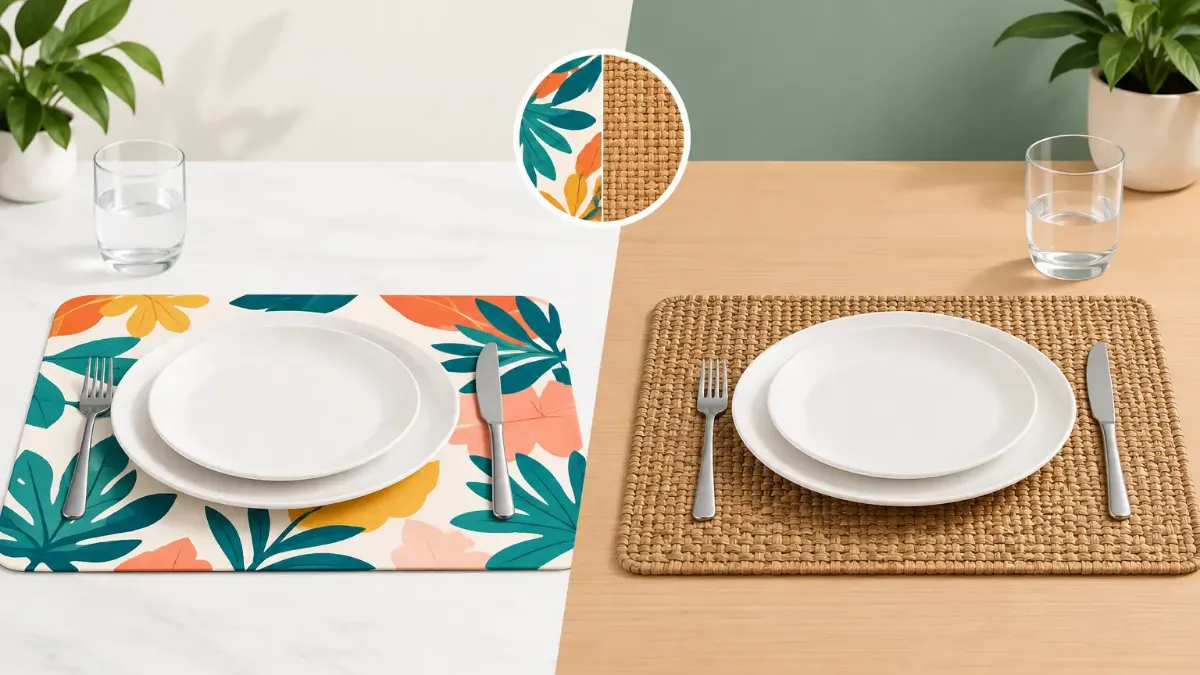
A placemat can disappear beneath a plate, or it can establish the entire mood of the table. That is the real distinction in sublimation versus woven placemats: one leads with artwork and color precision, while the other leads with texture and familiar material character. Neither is automatically better. The right choice depends on whether your setting needs a visual focal point, a tactile layer, or a little of both.
For design-conscious homes, the decision is rarely only about protecting the tabletop. It is about how a table looks on an ordinary Tuesday night, how it photographs before guests arrive, and how easily it can shift with the season.
Sublimation Versus Woven Placemats: The Visual Difference
Sublimation placemats are made for image-driven design. During production, heat transfers dye into a specially prepared polyester surface. The color becomes part of the material rather than sitting as a printed layer on top. That process supports saturated hues, fine linework, painterly effects, and intricate repeating patterns that would be difficult to achieve with traditional woven construction.
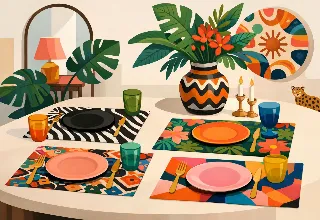
A watercolor floral, a graphic checkerboard, or an abstract coastal palette can retain detail from edge to edge. This makes sublimation especially compelling when the placemat is intended to feel like a small work of art. At SubliLux, that design freedom is central to the appeal: the table becomes a surface for personal expression, not merely a place to set dinner.
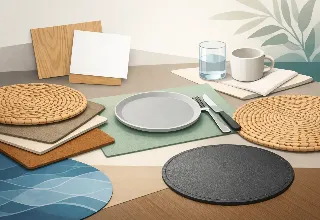
Woven placemats tell a different visual story. Their character comes from interlaced fibers, whether cotton, vinyl, jute, bamboo, seagrass, or synthetic yarns. They tend to create a quieter foundation, with visual interest supplied by ribbing, basketweave texture, fringe, or natural variation. A woven mat can make a table feel grounded and relaxed, particularly alongside wood, stoneware, linen, or rustic ceramics.
The trade-off is image complexity. Woven pieces can include patterns and color, but they generally cannot reproduce sharp photographic detail or layered artwork with the same clarity as sublimation. If you want the placemat itself to carry an expressive print, sublimation has the advantage. If you want the materials around it to take center stage, weaving may be the better backdrop.
Color That Holds Its Presence
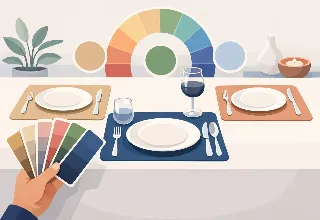
Color changes the perceived quality of a table setting. Deep blues, warm terracottas, jewel tones, and high-contrast black-and-white patterns need consistency to look polished rather than faded or flat. Sublimation is particularly strong here because it produces vivid, high-resolution color without a heavy painted feel.
This matters in rooms where a placemat supplies the accent color. A bold print can pull together dining chairs, artwork, glassware, and napkins without requiring a full redesign. It also gives hosts an easy way to create a distinct look for holidays, birthdays, patio dinners, or seasonal gatherings.
Woven placemats often offer a more restrained palette. Natural fibers may soften over time, which many people appreciate as part of their lived-in appeal. Synthetic woven options can provide stronger color, though their pattern is still shaped by the structure of the weave. For a tonal dining room or a neutral kitchen, that subtlety can be exactly right.
Consider how much color your room already contains. In a calm, neutral space, an art-led sublimation placemat can introduce personality with very little effort. In a room filled with patterned upholstery, colorful dishes, or statement lighting, a woven texture may give the eye a needed place to rest.
Texture, Structure, and the Feel of the Table
Woven placemats have an immediate tactile advantage. Their dimensional surface can add warmth to a table before any dish is placed on it. Textured fibers work beautifully for casual outdoor lunches, organic modern interiors, and layered tablescapes where the contrast between smooth plates and rougher materials is part of the design.
That texture has practical implications, too. Deeply woven surfaces can catch crumbs, sauce, and dust. Natural-fiber mats may be less forgiving when exposed to spills, moisture, or staining foods. Some woven vinyl products are easier to wipe down, but may still trap debris within the weave or feel less refined up close than a tightly finished textile mat.
Sublimation placemats usually offer a smoother, more even surface. That gives them a clean, tailored appearance and makes them well suited to detailed artwork. Their texture is less pronounced, so they may not deliver the same handcrafted or organic feel as jute, rattan, or cotton weave. Yet that smoother finish is often preferable for modern tables, graphic interiors, and settings where crisp pattern definition matters more than natural texture.
The choice can also depend on your dinnerware. Sculptural ceramics and handmade stoneware often look striking against a simple woven ground. Sleek white porcelain, colored glass, and contemporary flatware can look especially considered against a vivid sublimated design.
Care Is Part of the Luxury
A beautiful table accessory has to work in real life. Placemats meet coffee rings, pasta nights, children’s hands, candle wax, and the occasional rushed cleanup before company arrives. Easy care is not an afterthought. It is what allows a decorative piece to stay in regular rotation.
Sublimation placemats are valued for their practical finish. Because the design is transferred into the material, it is less likely to crack or peel like a surface-applied graphic. Many are simple to wipe after everyday meals, and their color remains visually strong when cared for according to the product instructions. They are a natural fit for households that want artistic impact without treating every place setting as too precious to use.
Woven placemats require more variation in care because the material matters so much. Cotton and natural fiber styles may need spot cleaning, gentle washing, or careful drying to avoid warping. Jute, straw, and seagrass can be sensitive to moisture. Vinyl weaves are often more durable for everyday use, though they may require extra attention between the strands.
For families, frequent hosts, and anyone who uses the dining table as a workspace between meals, a smooth sublimation surface often feels more effortless. For occasional entertaining or low-mess settings, woven placemats can be a satisfying choice when their texture suits the room.
When Woven Placemats Are the Better Choice
Woven placemats remain a strong option when their material quality supports the design direction. Choose them when you want a relaxed, natural, or layered look; when you are styling a wood table that benefits from warm texture; or when the placemat should support rather than command attention.
They are also useful for settings that already have a strong visual identity. A patterned tablecloth, ornate dinnerware, or richly colored centerpiece may call for a quieter foundation. In those cases, a woven neutral can provide balance without competing for attention.
Just be honest about the setting. An open weave on a busy family breakfast table may create more cleanup than it is worth. A delicate natural fiber mat on a covered patio may be beautiful until humidity, spills, or sun exposure become part of the routine.
When Sublimation Placemats Make More Sense
Choose sublimation placemats when the design is the point. They excel in spaces that need color, seasonal personality, or a specific artistic point of view. They also suit gift buyers who want an item that feels personal and distinctive rather than generic.
A coordinated set can shift the mood of a dining area in minutes. A botanical print can soften a city apartment. A bold geometric can sharpen a minimalist kitchen. A warm, illustrated pattern can make an everyday table feel ready for guests. Unlike a major furniture purchase, placemats make that visual change accessible and reversible.
They are particularly effective when you want consistency across multiple mats. Woven materials may vary naturally from one piece to another, which can be charming but less precise. Sublimation allows a repeated design to remain crisp and cohesive across the table, creating a composed presentation for four, six, or more guests.
Make the Choice Around How You Gather
The best placemat is not the one with the most texture or the boldest color. It is the one that supports the way you live. If your table is a daily hub and you want expressive design that stays easy to manage, sublimation is likely the stronger fit. If your ideal setting leans natural, understated, and tactile, a woven placemat may feel more at home.
Start with the feeling you want guests to notice when they sit down. A considered table does not need to be complicated. It simply needs a point of view.