A Practical Guide to Selecting Placemat Materials
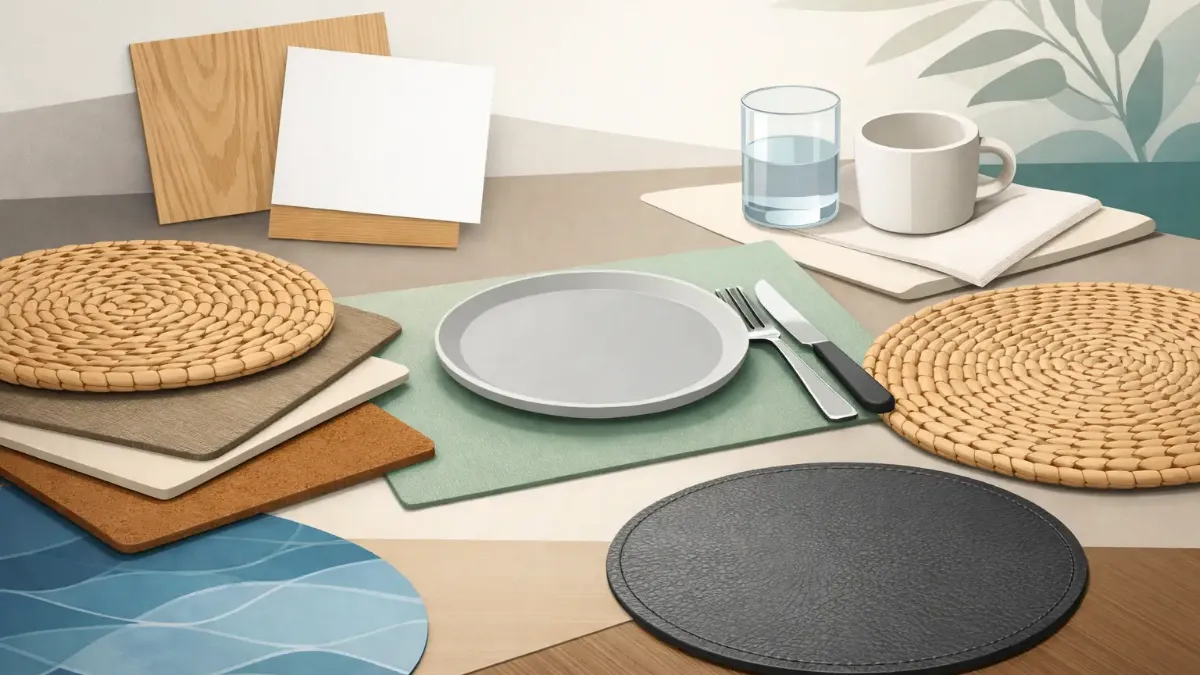
A placemat changes more than the surface beneath a plate. It can sharpen a tablescape, soften a bright dining room, introduce a season, or make a casual weekday meal feel intentionally set. This guide to selecting placemat materials begins with that larger purpose: choose for the visual experience you want, then make sure the material can support the way you actually live.
The most beautiful option is not always the right one for a busy family breakfast, an outdoor dinner, or a carefully styled holiday table. Material affects color, texture, care, heat tolerance, and how polished the table feels when guests arrive. The right choice brings those details into balance.
Start With the Table You Want to Create
Before comparing fibers, finishes, and care instructions, consider the atmosphere. A smooth, art-printed placemat can make a plain dining table feel graphic and collected. Woven natural fibers introduce warmth and dimension. Linen brings softness and a more relaxed sense of occasion, while leather-like surfaces create a tailored, modern look.
Your table itself matters, too. Glass and high-gloss finishes often benefit from texture, which keeps the setting from feeling overly sleek. Rustic wood can carry a refined printed design beautifully, especially when you want the tabletop to feel less expected. On a heavily patterned tablecloth, a quieter solid placemat may be the more composed choice.
Also think about how often you want to change the look. If placemats are part of your seasonal decorating, easy-care materials with vivid artwork give you room to move from coastal color to autumn botanicals or festive motifs without committing to a permanent dining-room change.
Guide to Selecting Placemat Materials by Lifestyle
A material should suit the moments it will be asked to handle. A formal dinner that happens a few times a year has different needs than a kitchen table used for homework, takeout, crafts, and morning coffee.
Printed polyester and sublimation-ready fabric
For expressive, color-led tablescapes, printed polyester is a standout. It provides a smooth canvas for detailed artwork, saturated color, fine linework, and patterns that retain their clarity. Sublimation printing infuses color into compatible fabric rather than leaving a raised layer on the surface, making it especially appealing for placemats designed as decorative art.
This category is well suited to everyday dining because it is generally lightweight, easy to wipe or wash according to its construction, and resistant to the fading that can dull a lively design. It is also an excellent choice when coordinated sets, personalized visual themes, or statement patterns are central to the setting. At SubliLux, that marriage of artful color and practical tabletop function is the point.
The trade-off is texture. A smooth printed fabric does not offer the handwoven depth of rattan or the substantial drape of thick linen. If a highly tactile, natural look is your priority, it may be better used as the visual focal point alongside textured napkins, ceramic dinnerware, or a wood table.
Cotton and linen
Cotton placemats feel familiar, soft, and versatile. They can be woven, quilted, printed, or finished with subtle embroidery. They suit casual dining rooms and layered table settings where fabric napkins, runners, and relaxed texture are part of the design.
Linen brings a more elevated, organic character. Its natural variation looks particularly good in neutral interiors, European-inspired settings, and tables where understated texture matters more than crisp graphic color. Both materials can be washed, but neither is carefree in the same way as a wipe-clean surface. They may wrinkle, absorb spills quickly, and require more attention after meals.
Choose cotton or linen when you appreciate a lived-in finish and do not mind laundering. They are less ideal for young children, frequent sauces and spills, or outdoor entertaining where dampness and staining are likely.
Vinyl, PVC, and other wipe-clean surfaces
Vinyl and PVC placemats are made for speed. A quick wipe handles most everyday messes, making them a sensible option for families, patios, and high-turnover meals. They are available in many colors and patterns, including woven-look designs that imitate natural texture.
Their advantage is clear, but so is their limitation: some can feel more casual or utilitarian than a fabric or art-printed placemat. Lower-quality versions may curl at the edges, show scratches, or have a plastic sheen that competes with an otherwise refined setting. If you prefer this material, look for a clean finish, stable construction, and a color palette that complements the room rather than overwhelming it.
Avoid placing very hot cookware directly onto vinyl unless the maker specifically confirms heat resistance. A placemat is not automatically a trivet.
Natural woven fibers
Seagrass, jute, rattan, water hyacinth, and bamboo bring immediate texture to a table. These materials are especially effective for outdoor-inspired entertaining, coastal interiors, farmhouse tables, and layered place settings. A woven charger-like placemat beneath a simple white plate can make even a minimal meal feel styled.
Natural fibers do have practical limits. Their uneven surface may make some glassware less stable, and food can settle into the weave. Most should be spot-cleaned rather than soaked, and they can be sensitive to prolonged moisture. They are beautiful for a dinner party or a curated weekend brunch, but they may not be the most forgiving option for tomato sauce, toddlers, or daily use at a heavily used table.
Faux leather and cork
Faux leather offers a sleek, tailored finish that works well in contemporary homes, offices, and formal dining spaces. It lies flat, wipes clean easily, and gives each place setting visual definition. Rich neutrals such as cognac, espresso, charcoal, and ivory can anchor colorful dinnerware or a dramatic centerpiece.
Cork has a softer, more natural visual language. It is lightweight and often provides useful heat resistance, though care requirements vary by finish. Both materials should be protected from harsh cleaners and long exposure to intense sunlight. Faux leather can crack or peel over time if quality is poor, while cork can stain if spills sit too long.
Consider Care Before You Fall for the Pattern
Care is the quiet factor that determines whether placemats remain part of your routine or get saved for special occasions. Ask a simple question: after a typical meal at home, what will cleanup look like?
If the answer is a damp cloth and five minutes before everyone leaves the table, choose a wipeable or easy-care printed material. If you enjoy laundering textiles and resetting the table with fresh linens, cotton and linen may be worth the added effort. For woven fibers, reserve a little patience for spot cleaning and occasional gentle brushing.
Do not assume that darker colors hide every mark. Oils, dust, and dried water spots can be visible on deep solid surfaces, while busy patterns can disguise minor everyday messes. A detailed art print may be both expressive and practical in a dining space that sees regular use.
Match Scale, Shape, and Material Weight
Material influences how a placemat sits on the table. Stiffer vinyl, cork, and faux leather tend to hold a precise rectangular or round shape. Fabric may have softer edges and more movement. Woven materials add thickness and visual weight, which can be an advantage on a large dining table but feel crowded on a small café table.
For compact spaces, slim rectangular placemats often keep the setting orderly. Round woven placemats can soften a square or rectangular table, but leave enough room between place settings so the tabletop still feels visible. If you use chargers, select a thinner placemat or skip the charger altogether. Too many layers can make dinnerware feel elevated in the wrong way.
A good rule is to let one element carry the visual weight. Choose an art-forward placemat with simple plates, or pair a textural woven mat with clean, understated dinnerware. When every piece competes for attention, the table loses its sense of ease.
Choose for the Occasion, Not Just the Room
There is no single best placemat material because a home rarely hosts only one kind of meal. You may want easy-clean printed placemats for weekday dinners, woven natural fibers for patio entertaining, and linen for a quieter holiday table. Building a small rotation lets your table respond to the season and the guest list without creating excess.
When deciding between two materials, picture the first meal you will serve on them. Consider the plates, the food, the people around the table, and the cleanup afterward. The placemat that supports that moment while adding the most character is usually the one worth bringing home.