How to Clean Printed Placemats Without Fading
A bright citrus spill, a ring of red wine, or a swipe of tomato sauce can make a beautiful table setting feel suddenly less composed. Knowing how to clean printed placemats properly keeps those moments from becoming permanent marks, while protecting the color, detail, and finish that made you choose the design in the first place.
Printed placemats are not all made alike, so the right approach is less about aggressive cleaning and more about matching care to the material. A gentle routine is usually enough to preserve an art-led tabletop piece for everyday meals, weekend brunches, and dinner parties alike.
Start With the Placemat’s Material
Before reaching for a cleaner, turn the placemat over and check for a care label or product description. The printed surface may look similar across styles, but its base material determines how much moisture, friction, and heat it can tolerate.
Vinyl, coated polyester, and many sublimation-printed placemats are typically made for easy wipe-clean care. They respond well to a soft cloth and mild soap, provided the surface is not scrubbed harshly. Cotton and linen placemats may be printed with inks that need more careful laundering, while cork, wood, and paper-based designs should never be soaked. Fabric-backed placemats also need attention at the edges, where excess water can seep into layers and affect their shape.
If instructions are unavailable, treat the placemat as a decorative surface rather than a kitchen towel. Begin with the least intensive method, test any unfamiliar product in a hidden corner, and increase cleaning strength only when the stain calls for it.
How to Clean Printed Placemats After Everyday Meals
For ordinary crumbs, fingerprints, and fresh food residue, prompt cleaning makes the biggest difference. Letting a spill dry gives it time to cling to texture, settle into seams, or leave a shadow on a pale background.
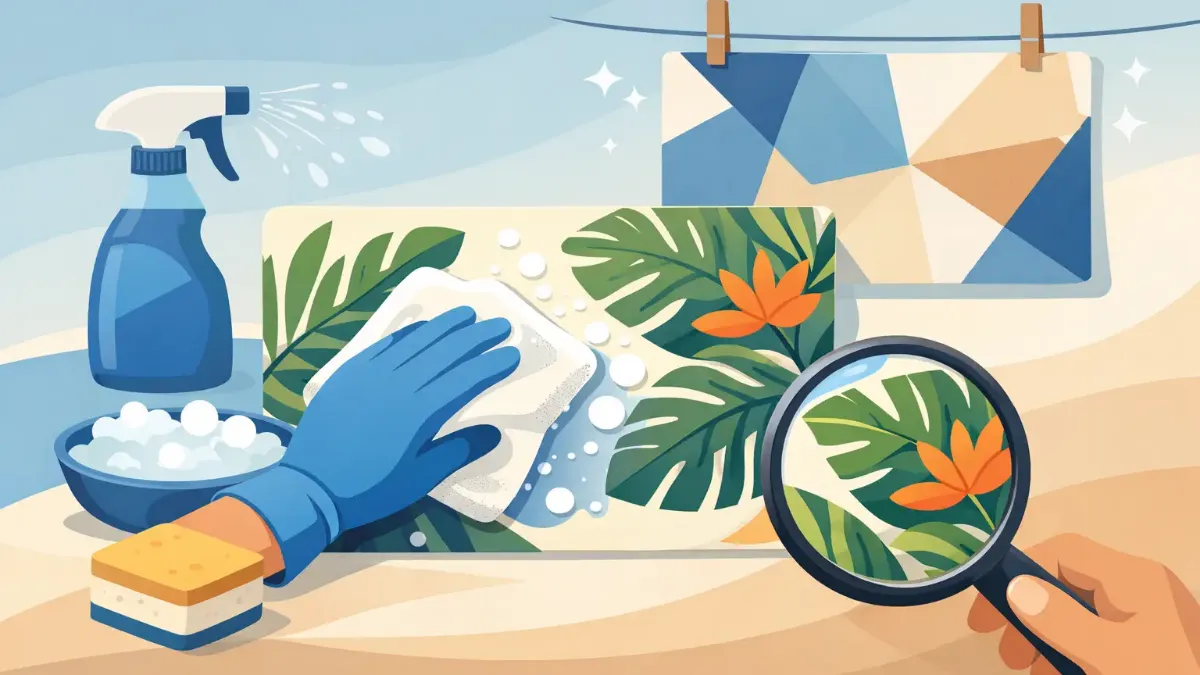
First, lift loose crumbs with a dry microfiber cloth or a soft brush. Then dampen a clean cloth with lukewarm water and add a small drop of gentle dish soap. The cloth should be damp, not dripping. Wipe the placemat in smooth, light passes, paying particular attention to the area around the spill without repeatedly rubbing the printed design.
Follow with a second cloth lightly dampened with plain water to remove soap residue. Finish by drying the surface with a clean towel, then leave the placemat flat until it is completely dry. This last step matters: stacking damp placemats can trap moisture and transfer color or texture from one surface to another.
For a polished finish, use a microfiber cloth rather than a rough dish towel. It collects residue without leaving lint and helps preserve the crisp look of a detailed print.
Why Gentle Pressure Protects the Artwork
A printed placemat does not need force to become clean. Heavy scrubbing creates friction, which can dull a coating, roughen a matte surface, or gradually wear at printed detail. This is especially visible on saturated colors, dark grounds, metallic effects, and high-contrast artwork.
Think of the surface as part of the design. Clean the spill, not the entire placemat with unnecessary pressure. A few careful passes are more effective than an extended scrub session.
Removing Common Stains Without Harsh Cleaners
Most dining stains respond well when they are treated while fresh. Blot liquids first rather than wiping them outward, which can spread a small mark into a larger one. For thicker foods such as jam, cream sauce, or frosting, lift the excess with the edge of a spoon before using a damp cloth.
For coffee, tea, juice, or wine, blot, then wipe with diluted mild soap. Repeat with clean water and dry promptly. If a faint mark remains on a wipeable placemat, use a soft cloth moistened with a mixture of water and a very small amount of white vinegar. Test first, particularly on glossy, textured, or specialty finishes.
Greasy residue from salad dressing, butter, or fried foods often needs a little more patience. Mild dish soap is designed to break down oil, so use it sparingly and work from the outer edge of the mark toward the center. Avoid adding more water than necessary, especially if the placemat has a fabric backing or layered construction.
For dried-on food, place a barely damp cloth over the spot for a minute or two to soften it. Then wipe gently. Do not use a scouring pad, stiff brush, razor, or abrasive sponge. They may remove the stain, but they can also leave a permanent cloudy patch or scratch across the artwork.
What Not to Use on Printed Placemats
The most common cleaning mistake is reaching for a powerful household product intended for counters, bathrooms, or cookware. Those products may be effective on hard surfaces, but a decorative printed finish has different needs.
Avoid bleach, chlorine-based products, acetone, nail polish remover, oven cleaner, and powdered cleansers. Strong disinfecting sprays and alcohol-heavy wipes can also affect coatings or color over time. Even when no damage is immediately visible, repeated use can leave a surface dry, tacky, faded, or unevenly glossy.
Heat deserves similar caution. Do not put wipe-clean placemats in a dishwasher unless their care instructions explicitly allow it. High heat, strong detergent, and prolonged water exposure can warp edges or compromise a printed layer. Keep them away from direct stovetop heat, and do not iron a printed surface unless the manufacturer specifically recommends a fabric-safe method.
Caring for Fabric Printed Placemats
Fabric placemats require a slightly different rhythm. Shake out crumbs after each meal and spot-clean fresh spills first. If the care label permits washing, turn the placemat print-side in, wash in cold water on a gentle cycle with mild detergent, and avoid bleach or fabric softener.
Air-drying is the safest choice for preserving color and shape. If a dryer is permitted, use low heat and remove the placemats promptly. High heat can shrink natural fibers, set stains, and make some printed areas feel less smooth.
For wrinkles, follow the label closely. Often, a low-temperature iron used on the reverse side with a pressing cloth is safer than placing heat directly on the printed face. If the placemat has a backing, padding, or special coating, skip ironing unless clear instructions say otherwise.
Keep Color Looking Intentional Between Uses
Cleaning is only part of placemat care. Where and how you store them influences their appearance just as much. Once dry, stack placemats flat in a cool, dry cabinet or drawer. Avoid folding them, particularly if they have a firm surface, as creases can become difficult to relax.
Keep them away from prolonged direct sunlight when not in use. Sun-filled dining rooms are beautiful, but continuous UV exposure can fade nearly any printed design over time. Rotating between a few favorite sets is a practical way to give each collection a longer visual life while refreshing the table for the season.
For entertaining, place trivets beneath hot serving dishes rather than setting them directly on the placemats. A placemat can protect a table from minor spills and everyday contact, but it is not necessarily a heatproof landing place for cookware. This distinction preserves both the placemat and the table beneath it.
At SubliLux, placemats are designed to bring artwork into the daily rituals of gathering. That calls for care that is uncomplicated, but never careless. A soft cloth, mild soap, and quick attention to spills will usually do more for a printed surface than a cabinet full of specialty cleaners.
The best routine is the one you can repeat without hesitation: clear the table, wipe gently, dry fully, and put each placemat away ready to make the next meal feel considered.