Fabric Versus Vinyl Placemats for Your Table
A placemat does more than catch crumbs or soften the sound of dinnerware. It establishes the material mood of the table before a plate is placed. When comparing fabric versus vinyl placemats, the better choice is less about a universal winner and more about the kind of room, meal, and visual statement you want to create.
Fabric brings texture, softness, and a layered look. Vinyl brings polish, quick cleanup, and clear practicality. Both can be beautiful. The distinction lies in how each material supports the way you live and entertain.
Fabric Versus Vinyl Placemats: The Visual Difference
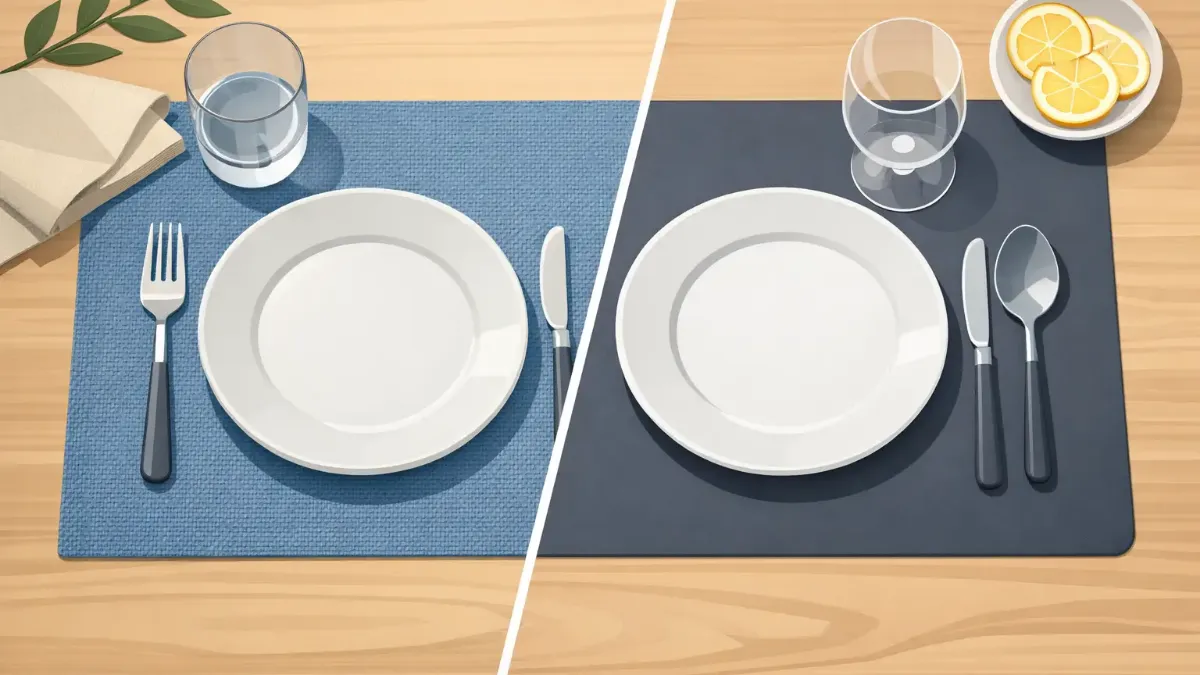
Fabric placemats tend to make a table feel dressed. Woven cotton, linen blends, and printed textiles introduce depth that a smooth surface cannot fully replicate. Their fibers catch the light softly, and their relaxed structure works especially well with ceramic dinnerware, cloth napkins, taper candles, and collected serving pieces.
They are a natural choice for a dining room where the table is part of the decor even between meals. A richly colored textile print can connect a room's artwork, drapery, or accent chairs to the table without making the setting feel overly coordinated. For seasonal entertaining, fabric also offers a warm, tactile quality that suits long dinners and layered place settings.
Vinyl placemats create a cleaner visual line. Their surface is generally smooth, crisp, and more graphic in appearance. This makes them especially effective in kitchens, breakfast nooks, patios, and contemporary spaces where the table needs color and pattern without extra visual weight.
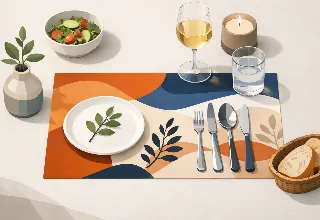
A vivid art-led design can look particularly striking on vinyl because the finish holds sharp edges and saturated color. It is a strong material for a table that needs to feel intentional quickly: set down the placemats, add simple white plates, and the setting already has presence.
Neither look is inherently more elevated. Fabric feels dimensional and composed. Vinyl feels edited and modern. The right answer depends on whether your table calls for softness or definition.
Everyday Care Changes the Decision
The practical difference becomes most apparent after the meal. Vinyl is the easygoing choice for frequent spills, sticky hands, and weekday dinners that end with everyone leaving the table at once. Most messes can be wiped away with a damp cloth and mild soap, then the placemats can be stored or left in place.
That convenience makes vinyl appealing for households with young children, busy kitchens, casual outdoor dining, and hosts who would rather spend time with guests than treat a wine spill as an emergency. It also works well in homes where the dining table doubles as a workspace, homework station, or craft surface.
Fabric asks for more care, but it rewards that care with a more residential, textile-rich finish. Depending on the fiber, fabric placemats may be machine washable, hand washable, or best spot-cleaned. Before choosing, check the care instructions and be realistic about your routine. A beautiful fabric placemat that is too delicate for your household may spend more time in a drawer than on the table.
For a formal dining room used primarily for weekend meals and holidays, that extra care may feel entirely worthwhile. For a table that sees breakfast, snacks, art projects, and three meals a day, vinyl may preserve its best appearance with far less effort.
How Each Material Feels at the Table
Material affects more than maintenance. It changes the experience of sitting down.
Fabric has a quieting effect. It cushions dinnerware slightly and can make a setting feel more relaxed, even when the design is dramatic. It also brings a sense of hospitality that works beautifully with handmade ceramics, matte flatware, and natural materials such as wood or stone.
Vinyl offers a firmer, more tailored surface. Plates sit on a stable, easy-clean ground, while the placemat itself reads almost like a framed piece of tabletop art. It is well suited to bolder patterns, high-contrast palettes, and tables that benefit from a precise, contemporary accent.
This is also where texture matters. A heavily textured fabric can compete with ornate dinnerware, while a glossy or very smooth vinyl finish can feel too sleek beside a rustic table. Pair materials with the character already present in the room. Let one element lead and allow the others to support it.
Color, Pattern, and Printed Artwork
For design-conscious homes, the print quality may matter more than the base material. A placemat should hold its color with confidence and make a table setting feel considered from every angle.
Fabric can give printed artwork a softer, more painterly character, especially on woven surfaces. Small variations in texture add personality, but they may slightly mute fine details depending on the textile and printing method. This can be an advantage for botanical motifs, watercolor effects, heritage-inspired patterns, and interiors with a collected point of view.
Vinyl often favors clean geometry, saturated color blocks, and crisp illustrative work. Its smooth face can make a pattern appear immediate and high-definition. For apartments, modern dining areas, and outdoor tables that need a strong visual focal point, that clarity can be exactly the point.
Sublimation-based printing offers another consideration: color can be integrated into compatible material surfaces rather than sitting as a heavy top layer. The result is especially compelling when artwork is central to the placemat's purpose, not merely decorative afterthought. SubliLux approaches placemats in that spirit - as functional pieces with the visual impact of curated tabletop art.
Durability Is Not the Same as Indestructibility
Vinyl has a deserved reputation for resilience, but it still needs thoughtful use. Sharp utensils, harsh abrasives, prolonged direct sun, and extreme heat can affect the finish or shape over time. Avoid placing very hot cookware directly on any placemat unless it is specifically rated for that use. A placemat is table protection, not a trivet.
Fabric is vulnerable in different ways. Oils and deeply colored foods can stain, repeated washing can gradually affect fibers, and damp storage can lead to unwanted odors or mildew. Yet a well-made fabric placemat can remain part of a table wardrobe for years when washed appropriately and stored flat or neatly folded.
Think of vinyl as the more forgiving daily surface and fabric as the more nuanced material that benefits from a little stewardship. Longevity comes from matching the material to the setting rather than forcing one placemat to do every job.
Choosing for Dining Rooms, Kitchens, and Patios
In a formal or design-led dining room, fabric often creates the richer finish. It can make a simple table feel layered, especially when the rest of the room includes upholstered seating, rugs, or other soft materials. Choose a pattern with enough presence to stand on its own, then keep the tableware restrained.
In a high-traffic kitchen, vinyl is often the practical favorite. It gives you pattern and color without adding laundry to the week. For a glass, lacquered, or light-colored table, it also provides a clear visual boundary for each place setting.
For patios, the choice depends on exposure. Vinyl is convenient for easy cleanup and sudden spills, but it should not be left outside through harsh weather unless the manufacturer says it is intended for that purpose. Fabric can look beautiful outdoors for a dinner party, though it should be brought in promptly and kept dry.
If your home moves between casual weekday use and more styled entertaining, there is no reason to choose only one. Vinyl can serve as the everyday collection; fabric can appear when you want the table to feel softer, more layered, and more occasion-ready.
The Better Choice Is the One You Will Use
Choose vinyl when speed, wipe-clean care, and crisp graphic impact are your priorities. Choose fabric when texture, warmth, and a more dressed table are worth a little additional attention. In both cases, look for a design that still feels like you after the centerpiece is gone and the plates are cleared.
The most memorable tables are not built from rules. They are built from color, material, and a point of view that makes an ordinary meal feel worth gathering for.