Printed Placemats Versus Table Runners
A table can look thoughtfully dressed or accidentally crowded with only one choice: what sits beneath the place settings. In the conversation around printed placemats versus table runners, the better option is not simply a matter of tradition. It comes down to how you use the table, how much visual presence the room can hold, and whether you want the artwork to belong to each guest or to the table as a whole.
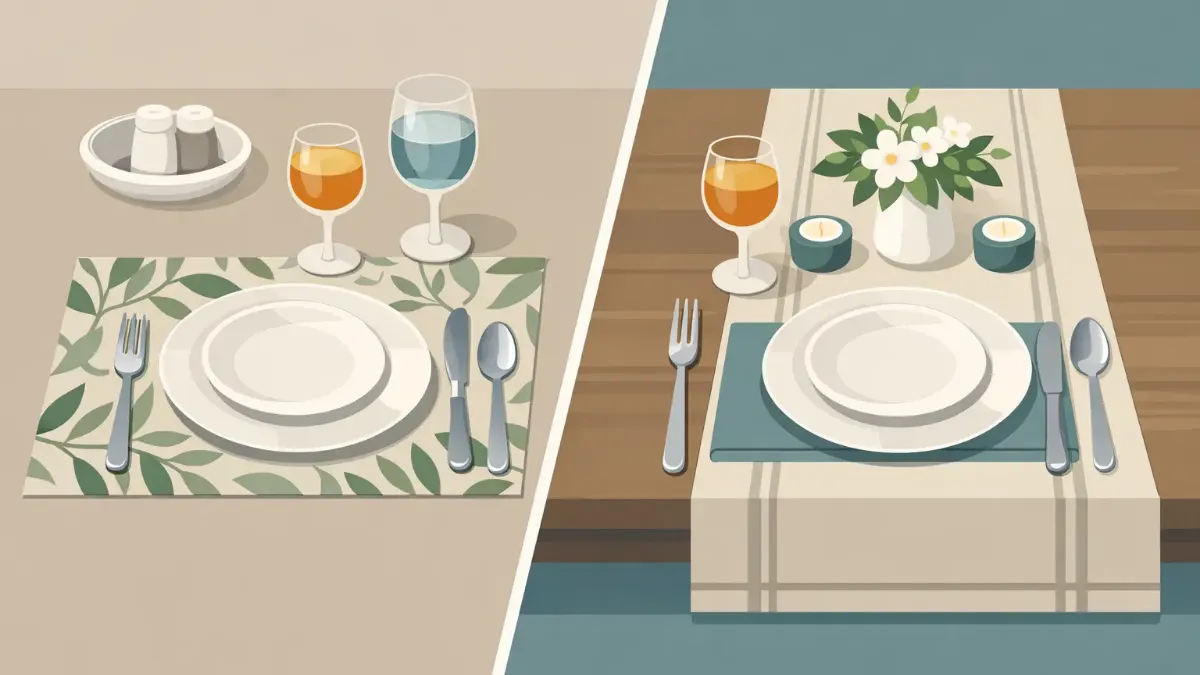
Both pieces bring color, texture, and occasion to a dining space. Yet they work at entirely different scales. A runner creates a central composition. Printed placemats create individual moments of design, framing each setting while protecting the surface beneath it. Understanding that difference makes choosing feel much less decorative and much more intentional.
Printed Placemats Versus Table Runners: The Visual Difference
A table runner leads the eye down the center of the table. It is especially effective on a long dining table, a narrow console, or a kitchen island where a single continuous gesture can make the surface feel more composed. It can anchor a centerpiece, candles, serving pieces, or a vase of branches without competing with every plate.
Printed placemats work laterally rather than lengthwise. They establish rhythm across the table, creating a clear place for each person to sit, eat, and enjoy the setting. Instead of one decorative strip, you have a repeated art element that gives the table color from edge to edge. This is why placemats often make a stronger impression on round tables, compact tables, and casual dining spaces where a runner can feel visually narrow or undersized.
The pattern itself matters. A runner has room for a large-scale, continuous motif, but much of that design may disappear under serving bowls and centerpieces. A printed placemat displays its artwork where guests can see it. Each setting retains a complete, deliberate composition, even after dinner is served.
For a table that needs more personality without more furniture, that distinction is meaningful. A set of vivid placemats can make an everyday dining surface feel like a finished part of the room rather than an empty expanse waiting for company.
Choose by How You Actually Use the Table
The most beautiful choice is the one that suits the life happening around it. If your dining table regularly hosts full meals, placemats offer a practical advantage. They define personal space, help contain the visual activity of plates and glassware, and provide direct protection from heat, drips, and scratches where those things occur.
They are also easy to adjust. Set four for a family dinner, add two for guests, or use one at a desk or breakfast bar. That flexibility is valuable in apartments and open-plan homes, where the dining table may become a work surface, a homework station, or a place for morning coffee between meals.
A runner is often the better choice when the table is used more as a display surface than a daily dining surface. On an entry table or sideboard, it adds softness and proportion without creating individual zones. On a dining table, it works beautifully for a relaxed, buffet-style gathering where the center of the table is the focus and place settings are secondary.
There is no need to treat this as a permanent decision. Many well-styled homes use runners for seasonal display and placemats for daily meals. The pieces answer different needs, and changing them with the occasion keeps the table from feeling static.
Consider the Shape and Size of Your Table
Long rectangular tables naturally welcome runners, particularly when there is ample open space in the center. The runner reinforces the table’s length and gives a central arrangement a clear stage. But a runner that is too narrow on a wide table can look lost, while one that is too wide can leave little breathing room for plates.
Placemats are more forgiving. On a rectangular table, they bring balance to each seat without requiring a precise centerline. On a square table, they keep the setting structured. On a round table, they can be the more natural choice because a straight runner may interrupt the table’s shape rather than complement it.
For smaller tables, printed placemats usually provide more impact per inch. A runner takes up central real estate, while placemats concentrate pattern exactly where the setting needs it. If you love a bold botanical, abstract, coastal, or seasonal print, this placement lets the design read clearly without overwhelming the room.
Color, Pattern, and the Mood of the Setting
A runner acts like a central accent wall for the table. It is ideal when you want one color story to run through an arrangement of neutral dishes, glassware, and linens. A solid runner can calm a busy room, while a patterned runner can unite a simple centerpiece with the rest of the space.
Printed placemats are more expressive by nature. Their repetition makes color feel intentional, especially when the dining chairs, wall art, or cabinetry are otherwise understated. They can introduce a saturated hue, an illustrated motif, or a layered pattern without requiring matching dinnerware. A clean white plate often looks more elevated against art-led placemats than against a bare tabletop.
This is also where high-quality print makes a visible difference. Fine detail, clear color, and a polished finish let the placemat function as décor rather than merely a protective layer. SubliLux approaches the category with that principle in mind: the tabletop can carry art, not just accessories.
If your table already has a dramatic grain, veining, or painted finish, choose a print that supports it rather than fights it. A quieter pattern can create contrast without visual noise. If the table is plain or dark, a brighter print may be exactly what gives the room lift.
Can You Use Both Together?
Yes, but restraint is what makes the pairing look considered. A runner and placemats can work beautifully for holidays, dinner parties, and layered seasonal settings. The easiest approach is to let one piece lead and let the other recede.
For example, pair a richly printed placemat with a solid or lightly textured runner. Or choose a bold runner and placemats in a related solid color. When both feature competing large-scale patterns, the place settings can begin to feel crowded before food ever reaches the table.
Leave visible tabletop around each element. That negative space is not empty. It gives color, pattern, and dinnerware room to register as distinct choices.
Care and Durability Matter More Than You Think
Table linens have an undeniably soft, traditional appeal, but they often ask for laundering, pressing, and stain management. For a busy household or frequent host, that upkeep can turn a beautiful setting into something saved for special occasions.
Printed placemats are often the more practical everyday option because they are designed for direct contact with meals and spills. A wipeable, easy-care surface makes it realistic to use color and artwork at breakfast, lunch, and dinner rather than reserving it for guests. They also store compactly and can be switched out quickly when seasons or moods change.
Runners require a little more attention when they extend beneath serving dishes, floral vessels, and candles. A spill in the middle can affect the entire piece, whereas a single placemat can be cleaned or replaced without interrupting the whole set. That said, a runner may experience less contact with forks, sauces, and glasses during formal meals, so its wear pattern can be gentler.
Think about your household honestly. If the table hosts children, pets, takeout, craft projects, or everyday meals, easy-care placemats tend to earn their place quickly. If the table is primarily styled between gatherings, a runner may deliver the right amount of decoration with less visual structure.
The Best Choice Is the One That Sets the Scene
Choose a table runner when you want to emphasize the center of the table, showcase a centerpiece, or add an elegant line to a long surface. Choose printed placemats when you want each seat to feel finished, protected, and visually distinct.
For many homes, placemats offer the more immediate transformation. They add art at eye level, make ordinary meals feel styled, and invite you to set the table because the result feels worth seeing. The right design does more than cover a surface. It gives even a simple dinner a setting of its own.