Best Placemats for Everyday Use at Home
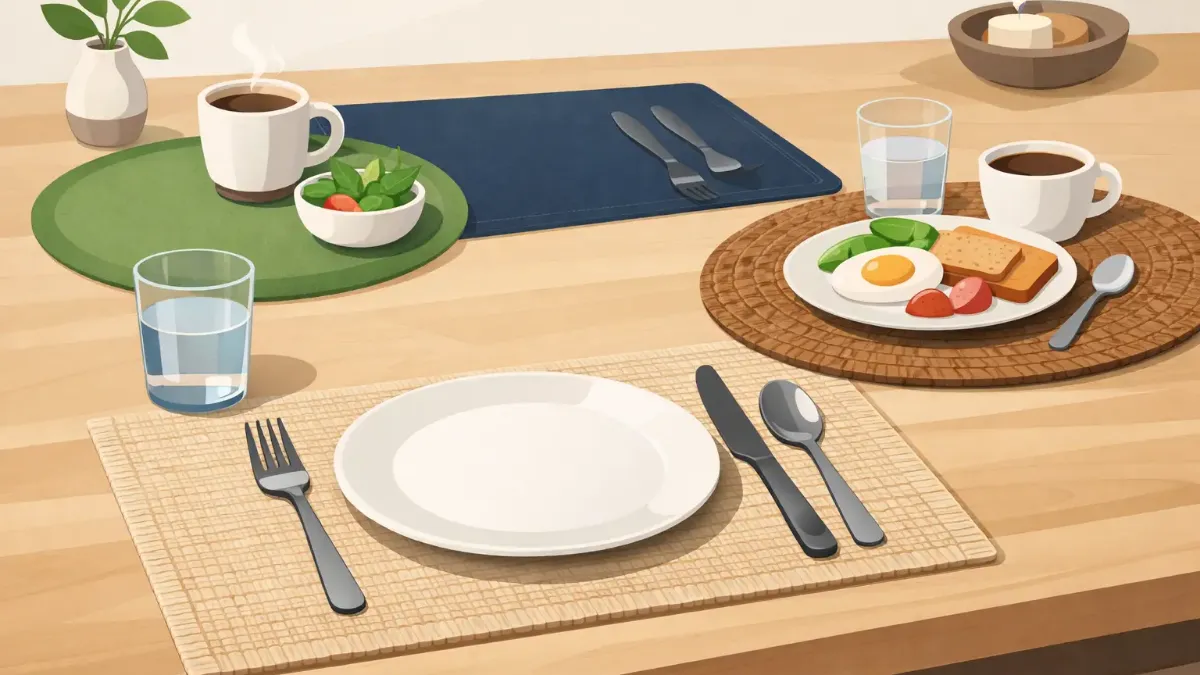
A dining table works harder than almost any surface in the home. It catches weekday breakfasts, homework, takeout nights, coffee breaks, candle wax, and the occasional dinner worth setting properly. The best placemats for everyday use should meet that reality without making the table look like an afterthought.
That means choosing beyond basic protection. A placemat is one of the fastest ways to introduce color, pattern, and a sense of intention to a kitchen, dining room, or patio. The right set should be easy to live with, proportioned for your place settings, and distinctive enough to make an ordinary meal feel considered.
What Everyday Placemats Need to Do
Everyday use asks for a careful balance. A placemat should protect the table from heat, moisture, scratches, and food spills, but it also needs to look good when it is left out between meals. If a design is too precious to use or too difficult to clean, it will spend more time in a drawer than on the table.
For most homes, the strongest choice is a placemat with a smooth, wipeable surface and a finish that holds its color over time. This is particularly valuable in high-traffic spaces: a sunlit breakfast nook, a busy family kitchen, or an outdoor dining area where pollen and splashes are part of the routine.
Design matters just as much. Neutral woven textures can create quiet warmth, while a vivid art print can anchor the room and make simple white dishes look newly styled. Neither approach is universally better. It depends on whether you want the placemat to blend into the setting or become the setting's visual focal point.
Best Placemats for Everyday Use: Start With Material
Material determines how a placemat feels, cleans, wears, and frames the meal. There is no single correct option, but some materials suit daily routines better than others.
Printed, wipe-clean placemats
For households that want a polished table without a long cleanup ritual, wipe-clean placemats are an excellent everyday choice. Their smooth surface handles common spills quickly, and richly printed designs offer a level of color and detail that natural fibers often cannot match.
Sublimation-printed placemats are especially compelling for design-led interiors. The process allows artwork to appear clear and saturated, with color integrated into the material rather than sitting on top as a fragile layer. Look for pieces with a refined finish and crisp image quality, particularly if the pattern includes painterly detail, botanicals, abstract color, or intricate geometry.
This option is ideal for families, frequent hosts, and anyone who wants a table that can shift from breakfast to dinner without changing the entire room.
Cotton and linen placemats
Cotton and linen bring softness and an easy, layered look. They work beautifully in relaxed dining rooms, farmhouse-inspired kitchens, and settings where fabric napkins and table runners are already part of the visual language.
The trade-off is care. Fabric placemats absorb spills, wrinkle more easily, and may need laundering or spot treatment. They can be the right choice for a slower, more tactile table, but they demand more attention than wipeable alternatives. A darker color or active pattern is often more forgiving than pale solid linen for daily meals.
Woven natural-fiber placemats
Seagrass, jute, rattan, and similar woven materials add texture instantly. They are especially effective against smooth tables because they introduce contrast without requiring bold color. A natural weave can make a glass, lacquered, or wood dining table feel warmer and more dimensional.
However, woven placemats are less forgiving with sauces, oils, and sticky spills. Their texture can trap crumbs, and prolonged moisture may affect their shape. Consider them for lower-mess homes, occasional entertaining, or as a layered base beneath an easy-clean placemat when the look calls for more depth.
Vinyl and plastic placemats
Vinyl and plastic are practical, inexpensive, and highly resistant to spills. They make sense for young children, outdoor meals, and tables that need frequent sanitizing. Yet the finish can sometimes feel overly casual or stiff, particularly in a dining room where the rest of the decor has a more elevated point of view.
A well-designed printed placemat can offer much of the same low-maintenance convenience with a more artful result. The difference is visual: instead of simply covering the table, it contributes to the room.
Choose the Right Shape and Scale
A placemat should give each guest enough space for a dinner plate, flatware, and a glass without crowding the person beside them. For a standard rectangular dining table, rectangular placemats are the most natural fit. They align with the table's edges and create a composed, architectural rhythm.
Round placemats soften the look of a square or round table and pair especially well with curved dinnerware. They also create a more relaxed presentation, since the shape is less formal and less directional. Oval forms offer a useful middle ground, bringing the softness of a curve while accommodating a more traditional place setting.
Before choosing a set, measure the usable width of the table, not just its total dimensions. Leave breathing room between place settings, and account for serving bowls or a centerpiece. A placemat that is too large can make even a generous table feel cramped. One that is too small tends to look incidental rather than intentional.
For everyday dining, consistency generally creates the strongest visual effect. Matching placemats establish order, while a coordinated collection of related prints can add personality without looking random. If you prefer an eclectic table, repeat at least one element across the designs - a shared color, style, or border treatment - so the mix still feels curated.
Let Color Do More Than Match the Dishes
The most successful placemats do not need to match every object in the room. Instead, they should relate to the larger palette. Pick up a color from nearby artwork, kitchen cabinetry, upholstery, or a rug, then let the placemat carry that note to the table.
A deep blue, olive, terracotta, or ochre design can ground a light wood table. On darker surfaces, brighter artwork and pale backgrounds keep the setting from feeling heavy. White dishes are particularly versatile because they allow a patterned placemat to read clearly, while colored dinnerware can be paired with a calmer design that gives the table visual rest.
Pattern has practical value, too. Small marks and everyday crumbs are less noticeable on layered artwork, tonal prints, and medium-to-dark colorways than on pale solid surfaces. That does not mean every daily placemat should be busy. A simple graphic border or a restrained abstract can offer the same forgiveness with a cleaner aesthetic.
Consider the Finish, Not Just the Artwork
A beautiful image is only part of the purchase. Pay attention to edge construction, thickness, and how the placemat lies on the table. Corners that curl, thin surfaces that shift under a plate, or edges that wear quickly can undermine an otherwise polished design.
For regular use, choose placemats that sit flat and feel substantial enough to define each setting. A modestly structured piece offers better protection and looks more finished than a flimsy sheet. If your dining table is delicate, confirm that the backing will not trap moisture or leave marks beneath hot dishes.
Heat resistance also deserves realistic expectations. Many placemats will protect a table from warm plates and bowls, but they are not always substitutes for trivets under cookware fresh from the oven or stove. Keep a coordinated trivet nearby for serving dishes. It preserves the placemats and makes the whole table feel more complete.
Make Everyday Care Effortless
The best daily routine is the one people will actually follow. Wipe smooth placemats after meals with a soft damp cloth, then dry them before stacking. Avoid harsh abrasives that can dull a printed finish, and address strongly colored foods such as tomato sauce, turmeric, or red wine promptly.
Fabric styles benefit from shaking out crumbs right away and treating stains before they set. Woven pieces should be gently brushed or vacuumed with care, then kept dry. Rotating between two sets is also useful: one can be in use while the other is being cleaned, and the change gives the table an easy seasonal refresh.
SubliLux placemats are designed for this intersection of daily practicality and expressive tabletop art. A richly printed design can make the everyday table feel styled without asking for special-occasion effort.
Choose a placemat you will be happy to see at 8 a.m., not only when guests arrive. When color, scale, and care align with the way you actually live, the table becomes a more inviting place to return to - meal after meal.