Placemats for Round Table That Look Considered
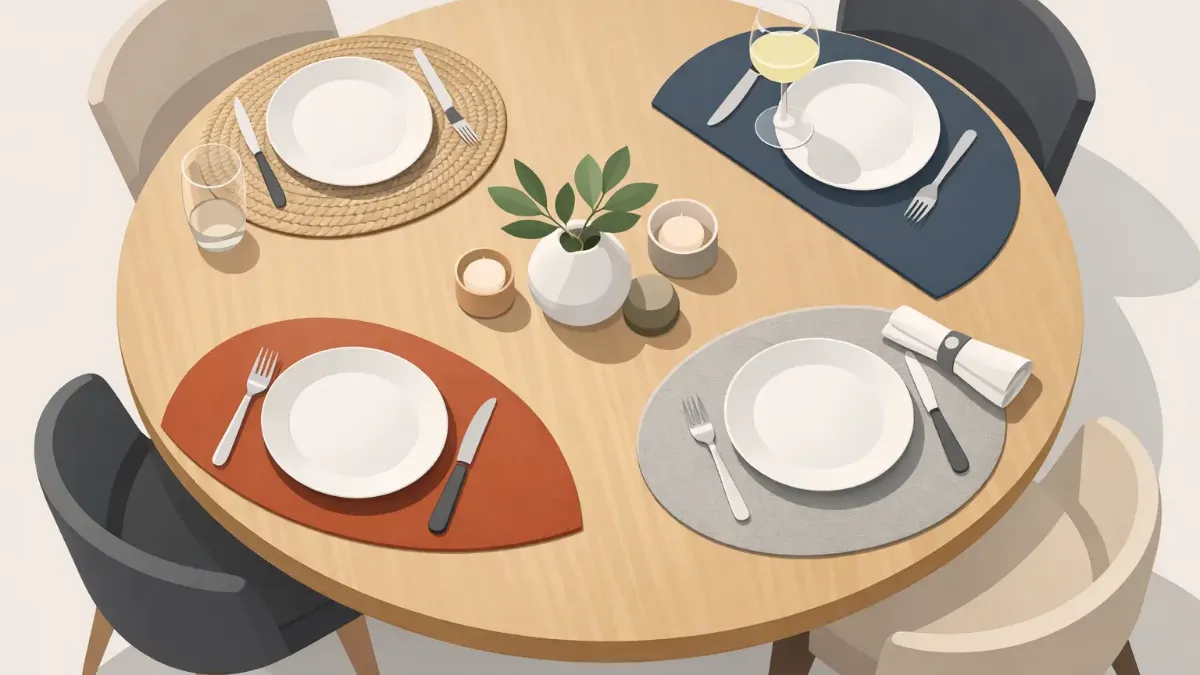
A round dining table invites conversation, but it also asks more of every detail placed on it. The right placemats for round table settings create a composed visual rhythm without covering the shape that makes the table special. They define each seat, protect the surface, and give breakfast, dinner, or an impromptu gathering a more intentional finish.
The common mistake is treating a round table like a rectangular one. A standard placemat may technically fit, yet its sharp corners can interrupt the table’s natural curve. The better approach considers proportion, place setting size, and the mood you want the room to hold. A placemat should support the table’s silhouette, not compete with it.
Start With the Table’s Diameter
Before choosing a pattern or color, measure the diameter of your table and consider how many people typically sit there. A 36-inch café table has very different needs from a 60-inch dining table, even if both are round. The goal is to leave enough visible tabletop between each setting so the arrangement feels open rather than crowded.
For a smaller table, oversized placemats can visually consume the surface and make a simple meal feel constrained. For a larger table, placemats that are too small can appear scattered and underdressed. A generous scale tends to look more polished, but it should still preserve a clear border around the table edge.
If your table expands with a leaf, think about the setting in both forms. Placemats that look ideal when the table is round may need a different layout once the surface becomes oval. Keeping a coordinating set in a complementary design gives you flexibility without losing visual continuity.
Choose a Shape That Complements the Curve
Round placemats are the most instinctive choice for a circular table. They echo the tabletop and soften the setting, especially when paired with rounded dinnerware or a pedestal centerpiece. They also make spacing easier because each place setting has a clear visual boundary.
That said, circles are not the only answer. Oval placemats offer a graceful, elongated profile that works beautifully when you want the table to feel slightly more formal. They create room for flatware and glassware while preserving a softer outline than a rectangle. A gently curved or scalloped silhouette can bring the same effect with more decorative personality.
Rectangular placemats can work on a round table, particularly in a tailored, contemporary room. The trade-off is visual tension: their corners create a graphic contrast against the circular tabletop. Choose them when that contrast is intentional, such as with clean-lined chairs, modern stoneware, or a structured black-and-white palette. For a softer, more fluid look, round or oval forms are usually the stronger choice.
Leave Room for the Center
A round table naturally draws attention to its center, so the placemats should frame that focal point rather than push into it. Arrange each setting with consistent spacing and resist the urge to overlap placemats heavily. Overlap can work for a styled photo or a very small table, but in daily use it often makes place settings feel less comfortable.
A low bowl of citrus, a sculptural vase, or a single candle arrangement can anchor the center while keeping sightlines open. If the centerpiece is wide, pull each placemat outward slightly. The table will still feel full, but guests will have enough room for serving pieces and conversation.
Let Artwork Set the Tone
On a round table, every seat faces the shared center. That makes pattern especially impactful. A placemat design is not simply seen from one direction; it becomes part of a 360-degree composition. Consider how the artwork reads when repeated around the table.
Botanical prints bring an easy sense of movement to circular settings. Abstract brushwork can make a simple table feel collected and gallery-like. Coastal blues, warm terracottas, and painterly neutrals can shift the atmosphere of a room without replacing a single piece of furniture.
For everyday dining, choose an art-led design with enough depth to disguise minor crumbs or water spots between cleanings. For entertaining, a bolder print can carry the setting with very little else required. A striking placemat paired with simple white dinnerware is often more memorable than a table layered with too many competing accessories.
SubliLux approaches placemats as decorative artwork for the table, with vivid printed designs that make color and pattern feel considered rather than incidental. This is particularly useful on a round table, where repeated placements turn a single design into a complete visual arrangement.
Build a Cohesive Place Setting
A placemat does not need to match every element at the table. In fact, a little contrast usually creates a more sophisticated result. Let the placemat supply either the color, pattern, or texture, then choose dinnerware and linens that give it room to stand out.
If the placemat has a detailed floral or abstract print, solid plates are an easy pairing. Pull one understated color from the artwork for napkins, glassware, or candles. If your plates are patterned, use a placemat with a simpler field of color or a restrained motif. The result feels layered, not busy.
Material perception matters, too. A glossy tabletop can benefit from a placemat with matte visual depth. A rustic wood table often looks especially good with crisp, saturated artwork because the contrast feels fresh. On marble, glass, or lacquered finishes, placemats add warmth while helping protect a surface that may show scratches or condensation more readily.
Match the Setting to the Occasion
The most useful placemats are not reserved for holidays. A thoughtfully chosen set can make weekday meals feel more finished, while a change of color or pattern can refresh the same table for a season or celebration.
For a relaxed morning setting, favor lighter palettes and uncomplicated place settings. For a dinner party, bring in richer color, folded napkins, and a centerpiece with a low profile. For an outdoor patio table, select designs that hold their own against natural light, greenery, and casual serving ware. The setting can be elevated without becoming precious.
Prioritize Easy Care Without Sacrificing Style
A beautiful placemat should earn its place at the table through regular use. For households with children, frequent hosts, or anyone who prefers low-maintenance entertaining, easy-care construction is a practical advantage. Look for a smooth finish that wipes clean easily and printed color that remains lively through repeated use.
Sublimation printing is especially valued for its clear color and detailed artwork. The design is integrated into the surface rather than sitting as a fragile top layer, helping it retain visual impact when the placemats are used as intended. Still, care instructions matter. Avoid harsh abrasives, excessive heat, and storage methods that permanently crease the material.
Store placemats flat whenever possible. If space is limited, stack them with a sheet of tissue or clean paper between more textured surfaces. This small habit keeps the set ready for a last-minute lunch, a planned dinner, or a table that simply deserves to look better than it did yesterday.
A Round Table Deserves a Deliberate Frame
The best placemats for a round table respect the shape of the furniture while adding a point of view. Start with scale, choose a silhouette that feels natural, then let color and artwork establish the mood. Whether your table is a compact kitchen centerpiece or the heart of a dining room, the right placemats make every place feel invited.