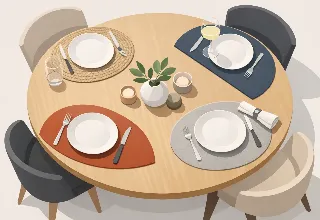
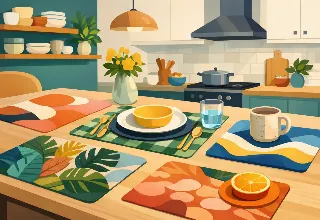
Placemats for Dinner Parties That Set the Tone
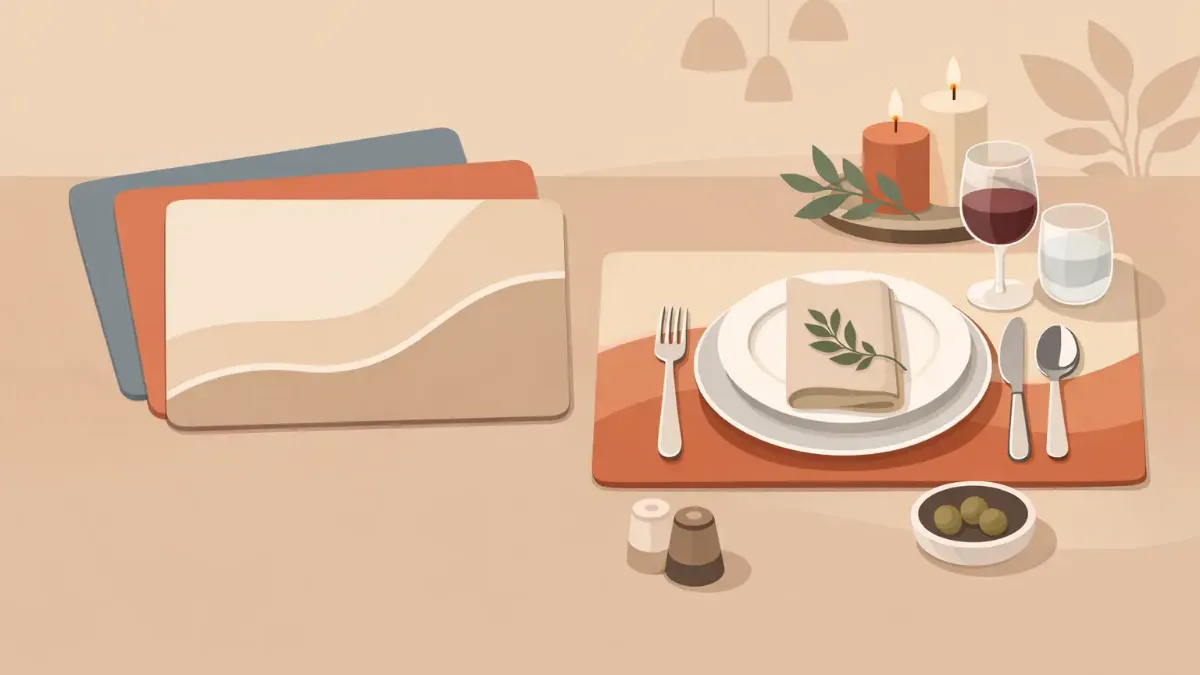
A dinner party table is noticed before the first course arrives. The glow of candlelight, the shape of the glassware, and the art beneath each plate quietly tell guests what kind of evening they have entered. Placemats for dinner parties are not a finishing touch. They are one of the fastest ways to give the table a point of view.
For hosts who care about atmosphere, a placemat can do more than protect a surface from heat, drips, and serving spoons. It can introduce color, ground a layered setting, or turn a simple weeknight menu into an occasion. The right design makes the table feel considered without making it feel overworked.
Start With the Mood, Not the Menu
It is tempting to choose tabletop pieces around the food, especially for a themed dinner. That approach can work, but it often creates a table that feels too literal. A better starting point is the mood you want guests to remember.
For an intimate candlelit dinner, look for deep tones, tonal florals, painterly abstracts, or dark botanical patterns. These designs hold their own in low light and give glassware and metallic accents more presence. For a bright lunch or patio gathering, crisp color, lively geometry, coastal scenes, or citrus-inspired artwork can make the table feel fresh without requiring a full seasonal overhaul.
A dinner party with a mixed guest list may call for something more versatile: a refined neutral ground with an artistic detail, such as a line drawing, textured stone effect, or a restrained botanical print. Neutral does not have to mean plain. A well-chosen design can create visual interest while leaving room for expressive flowers, food, and conversation.
Use Placemats for Dinner Parties to Create a Frame
Every place setting needs a visual boundary. Placemats provide it, giving each guest a defined space while connecting the entire table in one repeated gesture. This is especially valuable when the table itself is beautiful but visually busy, or when you are entertaining on a surface that needs a little softening.
Think of the placemat as the frame around a painting. It should support what sits inside it: the dinner plate, napkin, flatware, and glass. If your plates have a bold rim or intricate pattern, choose a placemat with a quieter field of color or a larger-scale design. If your dinnerware is clean white or simple stoneware, the placemat can carry more of the artistic energy.
Scale matters here. A small, dense pattern can become visually crowded beneath layered plates. Larger motifs and open compositions tend to read more elegantly from across the table. They also allow the artwork to remain visible once the setting is in place.
Build Contrast With Intention
The most polished tables rarely match every element exactly. They balance contrast: matte against shine, warm against cool, pattern against solid color. Placemats make this easy because they sit at the center of the setting.
A glossy white plate can feel especially striking on a richly colored or softly textured placemat. Dark ceramics gain clarity against a pale design. Clear glassware nearly disappears on a busy surface, so it often benefits from a placemat with calmer areas of color beneath it.
There is also a practical side to contrast. If you are serving a meal with sauces, red wine, or richly colored dishes, a very pale placemat may demand more attention throughout the evening. That does not mean light designs are off-limits. It simply means a layered, multitone artwork may be more forgiving than an uninterrupted field of ivory.
Coordinate Without Making It Look Coordinated
A designed table should feel collected, not cataloged. Rather than trying to match placemats precisely to napkins, runners, and centerpieces, choose one or two colors from the artwork and repeat them elsewhere.
For example, a placemat with terracotta, blush, and ink blue can pair beautifully with solid blue napkins and low amber glass votives. Let the remaining colors stay within the print. This creates cohesion without turning every item into a duplicate.
If you use a table runner, give it a different job from the placemats. A runner can add length and center the arrangement, while placemats establish individual place settings. When both are heavily patterned, they compete. In most cases, let one lead and keep the other more restrained.
The centerpiece should not hide the table
A low arrangement is usually the more gracious choice for dinner parties. Guests should be able to see each other without navigating around a wall of flowers. Keep the centerpiece narrow enough that the placemat design still has room to breathe at each setting.
This is where art-led placemats earn their place. They can bring visual richness across the full table, so the centerpiece does not have to do all the decorative work. A few sculptural stems, candles, or a simple bowl of fruit may be enough.
Choose Materials for the Way You Host
The best placemat is not always the most delicate one. It is the one that suits the rhythm of your home. If you host often, easy-care construction matters. Guests should feel welcome to relax, and you should not spend the evening worrying about a splash of olive oil or a dropped berry.
Printed placemats with a smooth, durable finish offer a useful balance for entertaining: expressive color, a clean visual surface, and straightforward cleanup. They are particularly practical for homes where the dining table does double duty for family meals, work, crafts, and weekend guests.
Texture is a separate consideration. Woven materials bring warmth and dimension, but they can catch crumbs and may not suit every type of meal. Fabric can feel soft and formal, though it often requires laundering and may show stains quickly. A wipeable artistic placemat offers a more relaxed kind of luxury - one built for use, not just display.
SubliLux designs are made for that intersection of art and utility, bringing vivid printed imagery to tables that are meant to be lived around.
Set the Table Before Guests Arrive
A beautiful setting is easier to achieve when you give yourself time to see it from the guest’s perspective. Put down the placemats first, then add plates, napkins, and glassware. Step back before adding more. If the table already looks complete, resist the urge to fill every open space.
Check spacing as well. Place settings that are too close make even a generous table feel cramped. As a general visual rule, leave enough room for elbows and for serving dishes to move comfortably through the center. If space is tight, skip oversized chargers and let the placemats provide the necessary visual foundation.
Lighting changes everything. Test the setting under the actual light you will use that night. Some colors deepen beautifully by candlelight, while others need the clarity of a lamp or overhead fixture. A printed design with contrast and saturated detail tends to retain its character after sunset.
Let the Table Carry the Memory
Guests may not remember the exact salad course or the brand of sparkling water, but they remember how a gathering felt. They remember sitting down to a table that looked generous, personal, and ready for them.
That is the quiet value of thoughtful placemats for dinner parties. They make the ordinary architecture of a meal - plates, glasses, forks, and shared dishes - feel like part of a larger composition. Choose artwork that feels like your home, set it with confidence, and let the evening unfold around it.