Best Placemats for Maximalist Homes That Pop
A maximalist table should never feel like an afterthought. It is a living surface: the place where patterned china meets colored glass, where a favorite centerpiece earns its drama, and where even a weekday meal can feel considered. The best placemats for maximalist homes do more than protect the table. They introduce a deliberate layer of art, color, and visual rhythm.
The goal is not to match every object perfectly. Maximalist rooms gain their energy from collected contrasts, repeated colors, and a point of view strong enough to hold them together. A well-chosen placemat gives that abundance a frame.
What Makes a Placemat Work in a Maximalist Home
Maximalism is often mistaken for simply adding more. In a successful room, every element has a role. A placemat may echo the red in a framed print across the dining room, soften a heavy wood table with botanical color, or establish a graphic base beneath a set of vintage plates.
The strongest options have visual presence from a few feet away. Look for saturated color, clear artwork, and patterns with enough scale to remain legible once plates, flatware, and glassware are in place. Tiny, low-contrast motifs can disappear under a full place setting. Oversized florals, expressive geometrics, painterly abstracts, animal-inspired prints, and architectural borders tend to hold their own.
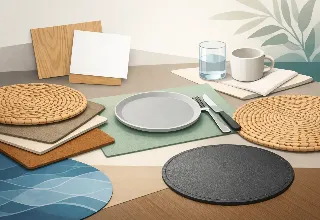
Material matters, too. A design-forward table still has to accommodate dinner, wine, and the occasional enthusiastic guest. Smooth, easy-clean placemats are especially practical for homes that entertain often or use their dining table every day. Premium sublimation printing is valuable here because it supports vivid, lasting artwork with sharp detail and rich color rather than the muted finish of a purely utilitarian table accessory.
Choose a Pattern With a Job to Do
Before choosing a print, look at what already leads the room. If the dining area has patterned wallpaper, an ornate rug, or highly decorative curtains, the placemat does not need to compete with every color and motif. It can instead repeat one key shade or introduce a cleaner graphic structure.
If the room is richly colored but largely solid, the table is an opportunity for bolder artwork. A floral or abstract placemat can supply the movement that turns a simple dining set into a scene. The best choice depends on whether the table needs contrast, continuity, or a new focal point.
For patterned rooms, create breathing room
A placemat with a broad border, a single dominant motif, or a limited color palette can calm a wallpapered or textile-heavy setting without becoming plain. Think cobalt and cream, black and marigold, or a botanical design grounded by a deep solid field. It still reads as maximalist, but it gives the eye somewhere to rest between the plate and the room.
For neutral rooms, use the table as the artwork
A neutral dining room can support more theatrical choices: saturated jewel tones, high-contrast checkerboards, expressive florals, and art-inspired prints. This is particularly effective for renters and apartment dwellers who want a visible change without repainting walls or replacing furniture. Six placemats can shift the entire personality of a room in minutes.
For eclectic collections, repeat one color
Mixing prints is easier when color does the coordinating. A blue-and-orange placemat can sit naturally beside striped napkins, green glassware, and vintage floral plates if one of those colors appears in each element. Repetition is the quiet organizing principle behind a layered table.
Scale Is the Detail Most People Miss
Pattern scale determines whether a table looks intentionally layered or visually cramped. A large dining table gives wide, cinematic artwork room to breathe. On a smaller round table, a bold print can still work beautifully, but choose a design with a clear center or open areas around its edges so the arrangement does not feel crowded.
Also consider the size of the plate. A placemat should create a visible frame around the dinner plate, not vanish beneath it. If your everyday plates are wide, favor a placemat with color or a border that remains visible at the sides. If you use smaller plates, a more detailed full-surface pattern can become part of the place setting itself.
Shape changes the effect as well. Rectangular placemats feel tailored and architectural, especially on long wood tables. Round placemats soften angular furniture and pair naturally with curved-back chairs, pedestal tables, and rounded stoneware. Organic silhouettes introduce a more collected, artful mood, though they are best reserved for settings where a little asymmetry is part of the appeal.
Build the Table in Layers, Not Matches
A maximalist table rarely benefits from buying every component as a set. Instead, start with the placemat as the visual base and add layers that vary in texture, finish, and scale.
A richly patterned placemat may call for a solid dinner plate, colored tumbler, and napkin in one picked-up shade. Alternatively, pair it with a patterned plate that uses a different motif but shares a color family. The key is hierarchy. Let one element be the loudest, one support it, and the rest provide texture or shine.
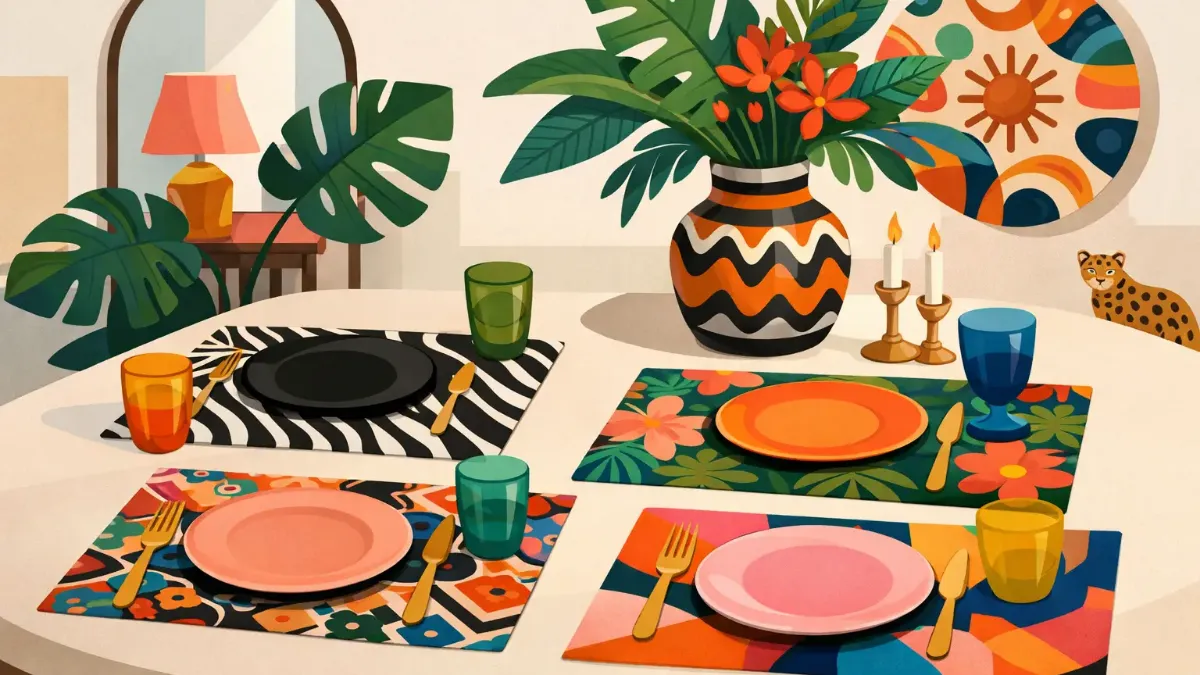
For example, a botanical placemat in emerald, coral, and saffron could be styled with ivory stoneware, coral linen napkins, brass-toned flatware, and clear or lightly tinted glassware. The setting feels abundant because it has layers, not because every item is competing for attention.
Texture is equally useful. Glossy ceramics, woven napkins, polished metal, colored glass, and a smooth printed placemat create contrast that photographs beautifully and feels inviting in person. When every surface has the same finish, even a colorful table can fall flat.
The Best Colors Are Not Always the Brightest
Maximalism welcomes bright color, but saturation alone is not the standard. Deep ink blue, oxblood, forest green, espresso, and black can give a table as much drama as orange or fuchsia. Dark grounds are especially effective when you want brightly colored plates and flowers to stand out.
A lighter palette works when the room already carries strong color through art, upholstery, or walls. Cream, pale pink, soft blue, and warm yellow can still feel expressive when they are paired with a distinctive print and confident accent colors.
Consider the lighting, too. A placemat that looks electric in a sunlit kitchen may feel more subdued under warm evening bulbs. If you host dinners often, choose colors that retain definition in lower light: deep backgrounds, clear contrast, and artwork with visible outlines tend to perform well after sunset.
Practical Details Keep the Look Luxurious
The most beautiful placemat is only useful if you are comfortable bringing it out for a real meal. Easy-care construction matters in a home where the table sees coffee, craft projects, takeout, holiday dinners, and everything between. A wipeable surface allows bold design to remain part of everyday life rather than something saved for special occasions.
Choose pieces with printing that stays crisp through regular use and colors that are designed to remain vivid. This is where art-led tabletop design earns its place. At SubliLux, placemats are conceived as decorative statements first, with the practicality required for the table to stay in rotation.
It is also worth owning more than one visual direction. One set might lean graphic and high contrast for dinner parties, while another brings in playful florals or coastal color for brunch and summer meals. Rotating placemats is a small gesture with an outsized effect, especially when the rest of the room stays the same.
Styling the Best Placemats for Maximalist Homes
Begin with a table that is clean enough to let the layers read. Place the placemats first, then center the plates rather than lining every edge with mathematical precision. Maximalism can be polished without looking stiff.
Keep the centerpiece low enough for conversation. A cluster of bud vases, sculptural fruit, tapered candles, or a single generous bowl can create presence without blocking sightlines. If the placemat pattern is especially detailed, choose a simpler centerpiece. If the placemat has a darker, calmer ground, use flowers or objects with more color and dimension.
Most of all, resist the urge to make the table behave like a catalog display. A maximalist home is personal. Let the placemats speak to the art you have collected, the glassware you reach for, and the meals you actually enjoy serving. The right design makes even the most layered room feel not busier, but more distinctly yours.