Placemat Materials Compared for Better Tables
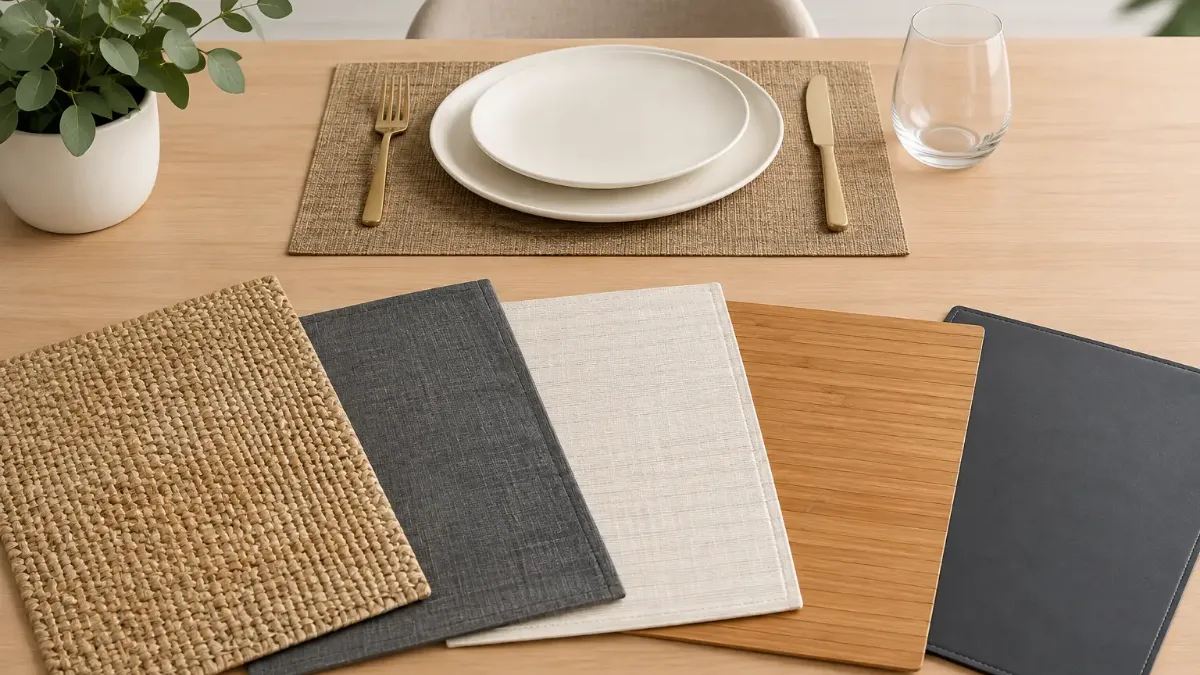
A placemat can either disappear beneath dinnerware or set the entire visual direction of the table. With placemat materials compared side by side, the difference is clear: the best choice is not simply the most durable or easiest to wipe. It is the material that supports how you live, host, and want a room to feel.
A relaxed breakfast nook has different needs than a dining room used for holiday meals. A patio table needs more moisture resistance than a carefully styled indoor tablescape. And if the placemat itself carries artwork, color fidelity and surface finish become central considerations, not afterthoughts.
Placemat Materials Compared: What Changes Most
Material affects four practical details: how a placemat feels, how it cleans, how much heat and spill protection it provides, and how well it carries a design. No single option leads in every category.
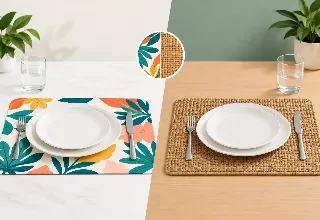
Natural textiles bring softness and an easy, layered look, but ask more of the person doing laundry. Vinyl and silicone simplify cleanup, though their look can feel more casual or utilitarian. Woven fibers create welcome texture, but crumbs and liquid can find their way through the weave. Printed polyester offers a particularly compelling balance for design-led tables, pairing crisp artwork with everyday care.
The right decision starts with the role your placemats play. Are they a finishing layer for occasional entertaining, a daily defense against children and coffee, or a fresh source of color in an otherwise neutral kitchen? Let that answer guide the material.
Cotton and Linen: Soft, Classic, and More Hands-On
Cotton placemats have a familiar appeal. They are soft under the hand, available in countless colors and weaves, and naturally at home in traditional, coastal, cottage, and casual dining spaces. They also layer beautifully with runners, napkins, and patterned dinnerware.
The trade-off is maintenance. Cotton can absorb sauces, wine, and oil quickly, especially in pale shades. It generally needs laundering after a spill-heavy meal, and it may wrinkle or shrink depending on its construction. Printed cotton can be beautiful, but repeated washing can gradually soften the intensity of the artwork.
Linen offers a more refined variation on the textile look. Its slubby texture and relaxed drape feel elevated without looking precious. Yet linen wrinkles readily, stains can set, and its irregular surface does not always deliver sharply rendered imagery. Choose it when tactile, natural character matters more than a pristine, graphic finish.
Vinyl and PVC: Easy Cleanup, Limited Warmth
Vinyl and PVC placemats are built around convenience. A damp cloth handles most spills, making them practical for weekday meals, outdoor use, and tables that see plenty of activity. They are often affordable, flexible, and easy to store.
Their limitation is aesthetic. Depending on the finish, vinyl can look glossy, thin, or overtly synthetic. It may also curl at the edges after storage, show dents, or become stiff over time. Strongly colored foods and spices can leave marks on lighter surfaces, and high heat is not a given. A hot serving dish should always have a trivet beneath it.
Vinyl works well when quick cleanup is the priority. It is less convincing when your goal is a table setting with the visual richness of art, fabric, or a thoughtfully finished décor object.
Woven Natural Fibers: Texture With a Few Rules
Rattan, seagrass, jute, and water hyacinth bring dimensional texture to the table. Their woven construction adds warmth immediately, especially against ceramic dinnerware, wood tables, and relaxed summer settings. They are particularly effective when the surrounding room needs contrast rather than more pattern.
They are not, however, the easiest option for messy meals. Liquid can seep into the weave, while crumbs settle into small gaps. Many woven placemats need to be shaken out and spot-cleaned rather than washed. Natural fibers can also fade or become brittle if left in direct sun for long periods.
This material is best reserved for low-spill meals, decorative layering, and hosts who value texture over total surface coverage. It provides atmosphere, but it is not a complete barrier between a table and a glass of red wine.
Cork, Bamboo, and Wood: Structured and Protective
Cork placemats offer a satisfying middle ground between natural style and practical protection. They have a soft, matte appearance, help buffer warmth, and stay relatively still on the table. Cork is also lighter and quieter than rigid wooden options.
Its porous nature requires care. Standing water, staining sauces, and harsh cleaners can compromise the surface unless it has been properly sealed. Printed cork can be attractive, but the texture often changes the clarity of detailed artwork.
Bamboo and wood placemats bring more structure. They suit modern-organic spaces, outdoor-inspired interiors, and settings where a clean linear shape feels right. Their rigid construction can be durable, but seams may collect residue and surfaces may scratch. Neither is ideal when the placemat is meant to display high-definition illustration, photography, or saturated color.
Silicone: Practical Protection for High-Use Tables
Silicone is often the most functional choice for households that need grip, flexibility, and easy washing. It is water-resistant, naturally non-slip, and better equipped than many materials to handle warm plates. For young families, crafting tables, and frequent patio dining, those qualities are useful.
Still, silicone has a distinct visual language. It tends to feel contemporary and functional rather than decorative, and lint or dust may cling to some finishes. It can also retain food odors if not thoroughly washed. A smooth silicone placemat can support color, but the material rarely creates the polished, textile-like appearance sought for a more formal or art-led setting.
Polyester and Sublimation: Designed for Color
For placemats where the design is the point, polyester is a standout material. Its smooth, consistent surface supports clean lines, detailed pattern, and richly saturated color. When paired with sublimation printing, color is infused into the material rather than sitting as a fragile top layer. The result is artwork that feels integrated with the placemat itself.
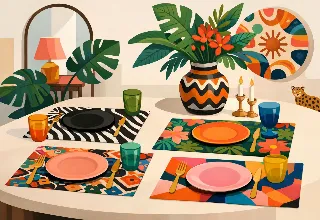
This matters when choosing bold botanicals, scenic imagery, abstract art, or a layered seasonal palette. Fine details remain legible, dark tones stay deep, and bright colors retain their intended energy. A well-made polyester placemat also tends to resist wrinkling, lies neatly on the table, and is straightforward to wipe clean or care for according to its construction.
Polyester is not identical to linen or woven fiber in hand feel. If your ideal table is entirely natural and tactile, a textured textile may be a better match. But for a setting that calls for precise artwork, reliable color, and repeatable polish, it offers a distinctly modern advantage. This is the balance behind SubliLux placemats: expressive visual design with a finish suited to real meals and real hosting.
How to Match Material to the Moment
For everyday dining, prioritize a surface you will not hesitate to use. Vinyl, silicone, and easy-care polyester are sensible choices, with polyester offering the strongest opportunity for an elevated printed look. If meals are especially messy, choose a placemat that can be wiped immediately and does not rely on an open weave.
For formal dinners, consider the composition of the full table. Linen and cotton bring softness under glassware and flatware, while a high-quality printed polyester placemat can introduce artful color without creating extra laundry. A richly designed placemat often needs little else beyond simple dishes and a restrained centerpiece.
For outdoor gatherings, avoid assuming every material is equally weather-ready. Silicone and vinyl are practical in changing conditions. Woven fibers can be beautiful for a dry, shaded lunch but should be brought inside afterward. Polyester designs can work well on a covered patio, provided they are cared for after spills and not left exposed indefinitely.
For gifts, design is often the deciding factor. The most memorable placemat is not merely useful. It reflects a recipient's favorite colors, entertaining style, home aesthetic, or sense of humor. A material that preserves a vivid image makes that personal choice feel intentional for longer.
Look Beyond the Material Name
Construction matters as much as the category on the label. Check whether a placemat has a finished edge, a backing that helps it stay in place, and enough weight to lie flat. Consider its dimensions in relation to your dinnerware, too. A generous placemat frames a place setting; one that is too small can make even beautiful artwork feel crowded.
Heat resistance deserves a measured approach. Placemats are designed to protect against everyday dishes, not necessarily cookware straight from the oven or stove. Keep trivets on hand for serving pieces, regardless of the material you choose.
The most successful table settings feel considered, not overworked. Choose a placemat material that makes you want to set the table on an ordinary Tuesday, then let its color, texture, and pattern give the meal a little more presence.