Glass Table Placemat Options That Look Refined
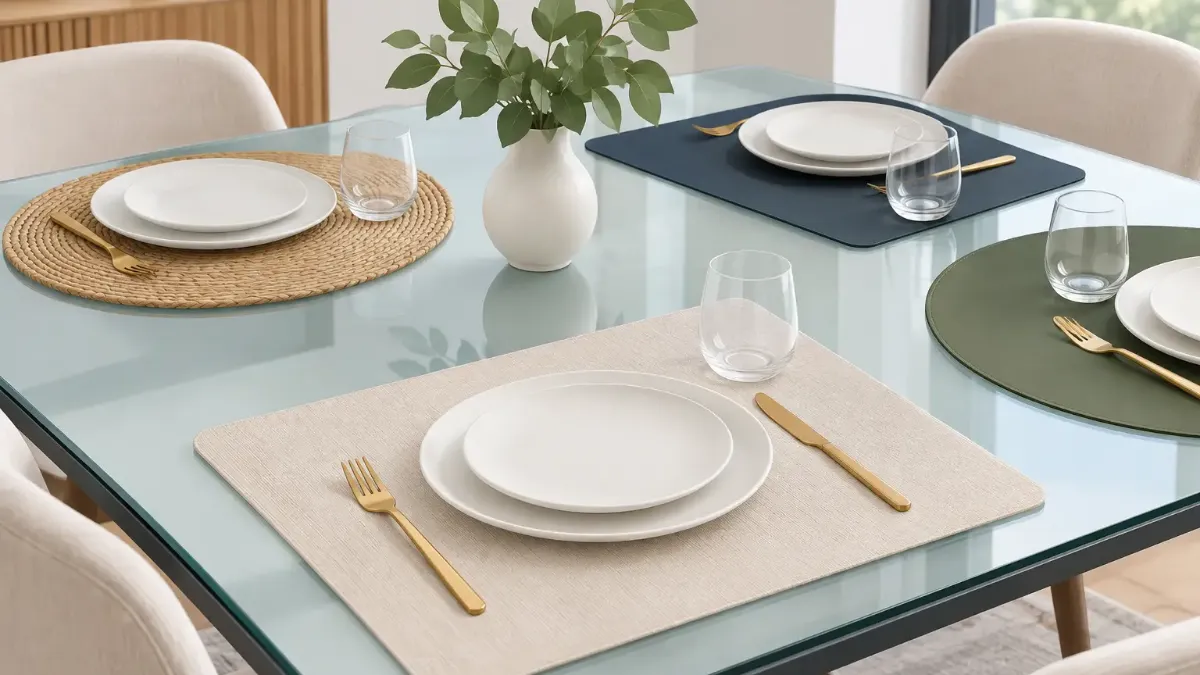
A glass dining table has a particular kind of presence: light moves across it, chair silhouettes show through it, and every place setting becomes part of the view. That also makes glass table placemat options more consequential than they may seem. The right choice protects the surface without obscuring its clean lines, while adding enough color, texture, or artwork to make the table feel considered.
For a casual breakfast nook, a quiet neutral may be exactly right. For a dinner party, the placemat can become the visual center of the table. The best option depends on how you use the room, the base beneath the glass, and whether you want your tableware to blend in or stand forward.
What a Glass Table Needs From a Placemat
Glass is durable, but it is visually unforgiving. Crumbs, fingerprints, water rings, and the hard edge of a ceramic plate are all more noticeable against a reflective surface. A placemat creates a composed boundary for each setting and softens the contrast between glass, dinnerware, and cutlery.
Protection matters, but weight and finish matter too. A placemat that is too thin can slide when someone pulls in a chair or rests an arm on the table. One with a highly glossy finish may create an overly reflective layer on top of glass, especially beneath pendant lighting. A stable, low-glare surface usually feels more polished.
Consider the table’s edges as well. Round glass tables often benefit from placemats with a gentle curve or a soft organic shape, which follows the table’s movement without looking rigid. Rectangular glass tables can carry more graphic geometry: clean rectangles, stripes, architectural patterns, or a structured border.
Glass Table Placemat Options by Material and Look
Material changes the mood of a setting as much as it changes care requirements. There is no universal winner. The right material should suit both the room’s visual language and the reality of how often the table is used.
Printed hardboard placemats
Art-led hardboard placemats offer a strong middle ground for glass tables. Their firm construction lies flat, creating a clean frame around a plate, while a finished surface makes everyday cleanup simple. They are especially effective when the table itself is minimal and the room needs a deliberate injection of color or pattern.
Sublimation printing is a natural fit here because it can hold saturated color, fine detail, and layered artwork with clarity. A botanical illustration, coastal palette, abstract composition, or seasonal motif can feel crisp rather than temporary. For a glass tabletop, that visual confidence matters: the design is seen clearly from every angle.
This option is best for everyday dining, entertaining, and homes where placemats need to move easily between dining room, kitchen, and patio-adjacent spaces. Avoid prolonged soaking and store them flat to preserve their finish.
Woven natural fibers
Rattan, seagrass, jute, and woven cotton introduce welcome warmth to glass. Their tactile surface offsets the coolness of a transparent top and works beautifully with wood chairs, linen napkins, ceramics, and natural centerpieces. They are an easy choice for relaxed, coastal, rustic, or organic-modern interiors.
The trade-off is practical. Open weaves catch crumbs, absorb spills more readily, and can look uneven under delicate stemware. They also tend to create a more casual setting. If your goal is a crisp, artful tablescape with strong color definition, a smooth printed placemat generally offers more control.
Vinyl and faux leather
Vinyl and faux leather placemats are popular for their easy-care appeal. They wipe clean quickly, resist many everyday spills, and bring a tailored look to a glass table. Solid black, camel, ivory, or deep green can anchor a modern dining area without competing with a statement chandelier or sculptural chairs.
Look closely at the backing and texture. A very smooth synthetic surface can shift on glass, while heavily embossed finishes may make glassware less stable. These placemats also tend to read more restrained than artistic, which can be ideal for formal settings but less expressive for a table that needs personality.
Fabric placemats
Linen, cotton, and quilted fabric make a table feel soft and hospitable. They can be layered with runners and cloth napkins for holidays or long, leisurely meals. On glass, however, fabric can show wrinkles and absorb condensation. Pale fabrics may also reveal spills more quickly because the transparent surface below offers no visual camouflage.
Choose fabric when atmosphere comes first and laundering is not a burden. For daily use, select a substantial weave or a lined construction so the placemat has enough body to remain visually tidy.
Choose Color With the Table Base in Mind
A glass tabletop never stands alone. Its base, chairs, flooring, and overhead lighting all show through or reflect across the surface. That is why a placemat color that looks excellent in isolation can feel wrong once it reaches the table.
If the table has a black metal base, use placemats to either echo that structure or soften it. Charcoal, ink, and deep jewel tones create a gallery-like look, while painterly florals or warm terracotta add contrast. A brass or gold base pairs naturally with cream, ochre, olive, midnight blue, and artwork that includes warm metallic-inspired accents.
For a clear glass table with light wood chairs, consider color as the element that gives the dining area its identity. A coordinated set in a single hue feels calm. A collection of related prints can feel collected and personal, provided they share a common palette. The goal is not perfect matching. It is visual rhythm.
White dinnerware gives you the most freedom. Patterned placemats become a backdrop that makes the plates feel intentional. If your dishes are already decorative, choose a placemat with a quieter field of color, a narrow border, or a scaled-back pattern. Two competing motifs can make a transparent table look busy very quickly.
Scale, Shape, and Layering
Before selecting a design, measure the usable dining area rather than the full tabletop. Each guest needs enough room for a placemat, glassware, and comfortable elbow space. On a compact round table, oversized rectangles can overlap or crowd the center. On a long rectangular table, undersized placemats can appear scattered and leave the setting without visual structure.
A standard rectangular placemat works well for most place settings, but shape can direct the mood. Round placemats soften angular furniture. Arched or scalloped silhouettes add a decorative note without requiring a busy print. A sharply rectangular design feels modern and composed, particularly when aligned with the edge of the glass.
Layering should be intentional, not automatic. A runner beneath placemats can add depth, but on a glass table it may hide the transparency you chose the table for. Reserve runners for special occasions, or use a narrow center piece that leaves ample glass visible around it. Let each layer earn its place.
Care That Keeps the Setting Looking Polished
Clean the glass first. A placemat cannot conceal dust or streaks around its perimeter, and a freshly cleaned surface makes the entire setting feel sharper. Wipe placemats after meals, especially after acidic foods, oils, or colored sauces, then allow them to dry fully before stacking.
Avoid dragging heavy ceramics across the table, even with placemats in place. Protection reduces the chance of surface marks, but it does not make glass indestructible. For hot serving dishes, use dedicated trivets rather than relying on a standard placemat unless its heat tolerance is clearly suited to the task.
Store sets flat in a dry cabinet or drawer. This prevents curling, keeps printed surfaces looking crisp, and makes it easy to bring out a new design whenever the season or occasion calls for a shift. SubliLux placemats are designed for exactly that kind of visual refresh: an artful change that asks nothing permanent of the room.
A glass table does not need to remain visually bare to feel light. Choose placemats that protect the surface, respect the proportions, and bring a point of view to every seat. When the meal is over, the right design leaves the room looking as composed as it did before the first plate was served.