Dining Decor That Makes Every Setting Matter
A dining table is one of the few surfaces in a home that changes purpose by the hour. It holds weekday breakfasts, work-from-home laptops, birthday cakes, takeout, and long dinners with people worth lingering over. Thoughtful dining decor gives all of those moments a visual point of view without asking for a renovation, new furniture, or a formal table reserved for special occasions.
The most compelling tables do not rely on excess. They rely on a clear idea: a color that draws the eye, a pattern with presence, a material that adds contrast, or an artful placemat that makes even a simple plate feel considered. The goal is not to make daily dining precious. It is to make the room feel like yours.
Start Dining Decor With the Table’s Character
Before choosing accents, look at the table itself. Its finish, shape, scale, and setting establish the limits that make styling feel intentional. A warm oak table can carry graphic black, deep green, cobalt, or terracotta beautifully. A glass table benefits from pieces that create definition beneath the place setting. Marble and white lacquered finishes often look best with designs that bring in warmth, texture, or a more expressive color story.
The surrounding room matters, too. Dining decor does not need to replicate the living room or kitchen, but it should feel related. If the space already features quiet neutrals, the table is an ideal place for a saturated pattern or a striking botanical print. If the room has strong wallpaper, colorful cabinetry, or prominent art, choose placemats and centerpieces that support the existing palette rather than competing for attention.
Think in terms of mood rather than strict matching. A crisp coastal blue, natural fiber, and white ceramic can read relaxed and polished. Jewel tones with clear glass and brushed metal feel more formal. Earthy ochre, charcoal, and walnut create a grounded, contemporary table. These combinations succeed because they create a consistent atmosphere, not because every item is identical.
Let Placemats Do More Than Protect the Surface
Placemats are often treated as an afterthought, pulled out only to catch spills or mark a seat. In a design-led setting, they are the foundation of the composition. They frame the plate, establish color at eye level, and create a repeatable visual rhythm across the table.
This is why artistic placemats can transform dining decor so quickly. A richly printed design introduces the impact of artwork in a format that remains useful. It can sharpen a neutral table, soften a sleek modern one, or make a seasonal gathering feel complete before the first glass is poured. Unlike a large rug or a new set of chairs, placemats ask for no installation and no long-term commitment. Their scale makes them easy to change with the season, the occasion, or simply a new mood.
Choose the shape with the table in mind. Round placemats echo circular tables and soften hard-lined furniture. Rectangular styles create order on long tables and work especially well beneath layered dinnerware. Organic or scalloped silhouettes bring a more collected, artistic effect, though they are best paired with simple plates so the outline remains visible.
Pattern deserves a little restraint. If the placemat carries an intricate floral, abstract, or painterly design, let solid dinnerware create breathing room. If the plates have a decorative rim, a quieter placemat can provide the right backdrop. The strongest tables usually have one visual lead, not five competing ones.
At SubliLux, art-led placemats are designed for exactly this role: tabletop pieces with enough visual clarity to set the tone while remaining practical for everyday use.
Build Layers With Contrast, Not Clutter
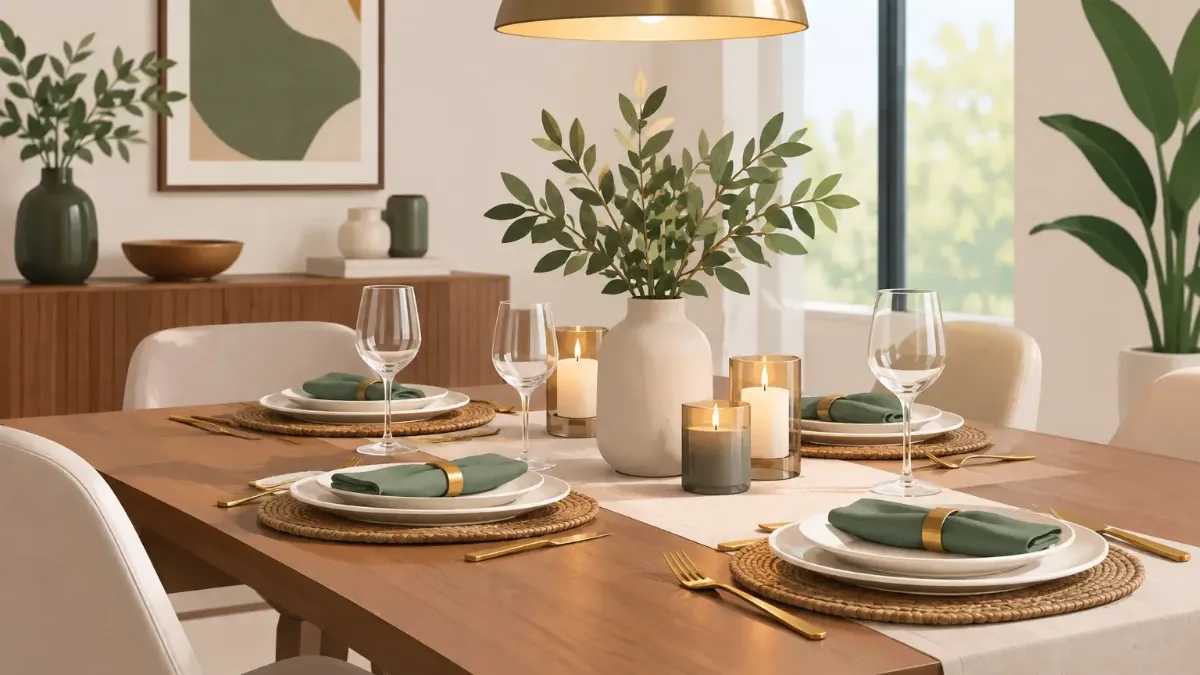
A well-dressed table has dimension, but it does not need a stack of accessories at every seat. Begin with a placemat, then add a dinner plate and, if the occasion calls for it, a smaller salad plate or bowl. Linen or cotton napkins offer softness against hard surfaces, while glassware introduces light and reflection.
Contrast is what keeps the layers from disappearing into one another. Pair a matte stoneware plate with a glossy patterned placemat. Set crisp white porcelain over a deeply colored design. Use woven napkins beside smooth ceramic. These distinctions make the table feel tactile and finished, even when the palette is limited to two or three colors.
Metal finishes should be treated as an accent, not a rulebook. Brushed brass adds warmth, polished silver feels tailored, and matte black brings graphic definition. Mixing finishes can work, especially in a more collected home, but repeat each finish at least once so it appears deliberate. Brass flatware beside a brass-toned candleholder, for example, feels far more resolved than a single isolated metallic element.
There is also a practical trade-off. Highly layered settings look memorable for dinner parties, but weekday dining benefits from fewer pieces and faster cleanup. Keep the foundation beautiful enough to stand alone. A compelling placemat, everyday plates, and a cloth napkin can look complete in under a minute.
Choose a Centerpiece That Leaves Room to Connect
The centerpiece should support the table, not occupy it. Low arrangements are usually the most successful because guests can see one another without looking around an obstacle. A shallow bowl of citrus, a small sculptural vessel, a cluster of votives, or a single branch in a narrow vase can provide enough presence without crowding serving dishes.
Scale changes with table size. A long rectangular table can handle a loose grouping of three low objects or several small vessels spaced along its center. A compact round table often needs just one gesture. Oversized arrangements may look dramatic in a photograph, but they can make an apartment dining area feel constrained and make conversation less comfortable.
For everyday dining decor, choose a centerpiece that is easy to move. A tray, bowl, or small vase can shift to a sideboard when it is time to serve dinner. This keeps the table useful while preserving the visual polish that makes the room feel cared for between meals.
Use Color to Mark the Moment
A table does not need a holiday theme to feel seasonal. Color and material can do the work with more sophistication. In spring and summer, consider airy blues, citrus shades, soft pinks, leafy greens, or bright artful prints. Add clear glass, fresh fruit, and lightweight linens for a setting that feels open rather than overly themed.
Autumn and winter invite more depth: aubergine, forest green, rust, ink blue, cranberry, and warm neutrals all create a richer visual field. Candlelight becomes more useful during these months, particularly when it reflects off glassware or glazed ceramics. A patterned placemat in a deeper palette can make everyday meals feel warmer without turning the table into a holiday display.
For entertaining, repeat one color from the placemats in a smaller detail. That might be a napkin, a flower, a taper candle, or the rim of a serving bowl. Repetition creates cohesion, while one unexpected note, such as a contrasting napkin or sculptural glass, keeps the setting from feeling overly coordinated.
Make Small Tables Feel Intentional
Limited space does not require limited style. In fact, dining decor is especially valuable in apartments and breakfast nooks because the table often sits in full view. It may also function as a desk, a craft surface, or part of an open-plan living area.
For a small table, avoid filling the center by default. Two expressive placemats, a compact vase, and one excellent set of candles may be all that is needed. When the table is not in use, leave out a single decorative object or a neatly arranged pair of placemats rather than turning it into a storage surface.
This approach has another advantage: it makes the shift from ordinary afternoon to impromptu dinner feel effortless. A table that already has visual identity only needs plates, glasses, and food to become welcoming.
Keep the Beautiful Things in Rotation
Premium dining decor earns its place when it is used. Save a more delicate layer for formal celebrations if you prefer, but let the pieces that bring color and character into the room appear often. Rotate placemats by season, by menu, or by the mood you want to create on a Wednesday night.
The final measure of a good table is not whether it looks untouched. It is whether it invites people to sit down. Choose pieces that make that invitation feel personal, practical, and a little more beautiful every time.