Decorative Placemats That Make a Table Feel Designed
A dining table can look unfinished even when the plates are beautiful. Decorative placemats establish the visual frame that pulls dinnerware, glassware, flowers, and food into one considered composition. They are a small change with immediate impact: a way to introduce art, color, and texture without repainting a room or replacing furniture.
For everyday meals, they create a sense of occasion. For a dinner party, they make the table feel prepared before the first candle is lit. The best designs do more than protect a surface. They give a table its point of view.
Why Decorative Placemats Change a Room
A table occupies more visual space than most people realize. In an open kitchen, dining area, breakfast nook, or patio, it often sits directly within the room's sightline. Leaving that surface bare can be elegant, but it can also make the room feel flat. Adding placemats introduces color at eye level, close to the details guests actually touch and notice.
Artwork is especially effective here because it gives a setting personality without demanding a full matching collection. A painterly floral can soften a clean-lined dining room. A crisp geometric pattern can bring energy to a neutral kitchen. Coastal blues, botanical greens, warm terracotta, or saturated abstract color can shift the feeling of a space in seconds.
This is why placemats are not merely accessories for formal dinners. They are flexible decor pieces. Unlike a rug, wallpaper, or upholstered chair, they can change with the season, the menu, or the mood of the gathering. A set can be selected for spring brunches, another for holiday hosting, and another for the easy rhythm of weekday meals.
Choose the Right Design Before the Right Pattern
Pattern may be the first thing that catches the eye, but scale and contrast determine whether a placemat looks intentional once it reaches the table. Before choosing a print, look at the room as a whole. Consider the table finish, chair upholstery, wall color, and dinnerware already in use.
A richly veined wood table often welcomes graphic designs because the pattern creates a clean visual layer over an active surface. On a glossy white, black, or glass table, softer artwork can add warmth and depth. If your dinnerware has a strong border or a detailed motif, placemats with a more open composition usually give the setting room to breathe. If the plates are simple, a bolder print can take center stage.
Color does not need to match perfectly. In fact, exact matching can make a table feel overly coordinated. A better approach is to repeat one or two tones found elsewhere in the room. A navy detail in artwork can relate to blue kitchen cabinetry. A muted gold element can echo brass hardware or candleholders. The result feels composed rather than staged.
Think About the View From Across the Table
Placemats are seen from standing height, from across the room, and from the seated position. Fine detail that looks exquisite in a product image may read as a solid tone from several feet away. Conversely, large-scale art can make a strong impression from a distance while still leaving room for plates and serving pieces.
For a compact table, choose designs with enough open space that the surface does not feel crowded. Larger dining tables can support more dramatic artwork, especially when the placemats are paired with simple white plates and clear glassware. The design should complement the meal, not compete with it.
Material, Finish, and Everyday Use Matter
A beautiful placemat that feels precious or difficult to clean may stay in a drawer. For most homes, the ideal option balances visual refinement with realistic maintenance. This is where printed tabletop designs have an advantage: vivid artwork can offer a polished appearance while remaining practical enough for daily use.
Sublimation-based printing is valued for saturated color and crisp detail. Rather than leaving a heavy printed layer on top of the surface, the process infuses color into the material, creating artwork that feels integrated with the placemat. The visual payoff is clear in designs with nuanced gradients, small illustrative details, or high-contrast color.
Durability still depends on how the placemats are made and how they are treated. A soft, fabric-like surface may suit relaxed dining and add warmth, while a firmer construction can feel more structured and may be easier to wipe after a busy meal. Neither is universally better. Families with young children may prioritize quick cleanup. Frequent hosts may prefer a finish that holds its shape and photographs beautifully under dinnerware.
SubliLux approaches this balance through art-led placemats designed to bring premium printed color into the routines of dining and entertaining.
Create a Setting That Feels Collected, Not Overdone
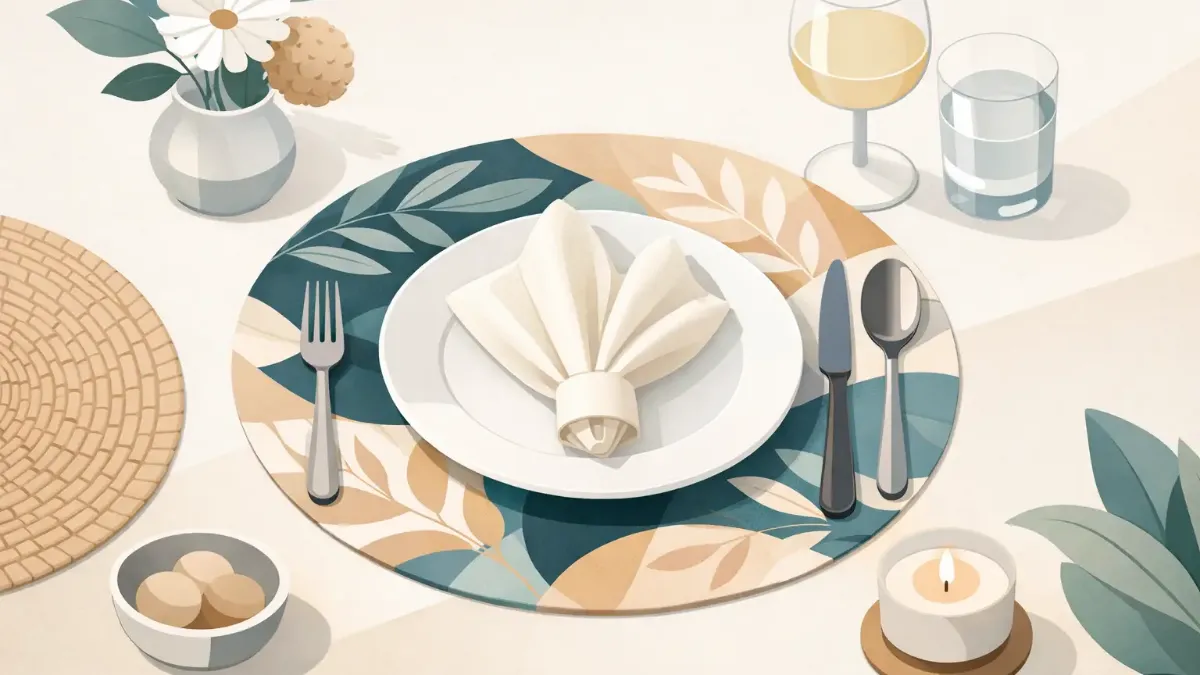
A placemat is one layer of a table setting, not the entire story. The strongest arrangements use it to establish a visual foundation, then build with restraint. Start with plates that either contrast with the design or quietly support it. Add a napkin in a solid color pulled from the artwork. From there, choose one accent, such as a low vase, taper candles, or a distinctive set of glasses.
If the placemats are highly expressive, let the rest of the table stay edited. White dinnerware, natural linen, and clear glass allow the art to remain visible. If the placemats are subtle, you have more freedom to bring in patterned napkins, colored plates, or a sculptural centerpiece.
Mixing sets can also work when it is done with a clear connection. Four different artistic designs in the same color family can make a casual table feel collected and personal. This approach is especially appealing for round tables, informal gatherings, and spaces where a uniform set might feel too formal. The unifying element could be a shared palette, a common style of illustration, or repeated tones in the napkins.
Use Shape to Support the Table
Rectangular placemats are a natural choice for rectangular and oval tables because they establish a tidy rhythm along the edges. Round placemats can soften a square table, complement circular tables, and create a more relaxed feel. Shape is not only functional. It affects the personality of the room.
Also leave enough breathing room between place settings. If placemats overlap or press into one another, even an exceptional pattern can lose its impact. On a smaller table, fewer place settings with generous spacing often looks more inviting than trying to fit every possible seat.
Make Everyday Meals Feel More Intentional
The real value of decorative tabletop pieces appears between special occasions. A quick breakfast before work, takeout on a Friday night, or a quiet lunch at home can feel more settled when the table is visually prepared. This does not require chargers, elaborate centerpieces, or formal etiquette. It may be as simple as placing two artful mats, setting out everyday plates, and adding a small bowl of citrus or a single stem in a glass.
For open-plan homes, this habit also helps the dining area feel connected to the rest of the decor. Change the placemats when you change throw pillows, seasonal florals, or artwork on a nearby wall. The shift is subtle, but it makes the room feel cared for.
Outdoor tables benefit in much the same way. On a patio, strong color can stand up to natural light and greenery, while botanical, Mediterranean, or abstract designs add character to casual summer meals. Just account for the conditions. Wind, direct sun, spills, and moisture all affect what will be practical for your space.
Care for the Art Without Treating It Like Museum Work
Good placemats should be used, not saved. Wipe away food and moisture promptly, follow the recommended cleaning method, and avoid harsh treatment that could affect the finish or shape. For storage, keep sets flat when possible, particularly if they have a structured construction. This helps them look polished when it is time to set the table again.
When a design begins to feel too familiar, rotate it rather than retiring it. A placemat set that spent summer on the patio can return in winter beside warm candlelight and look entirely different. That flexibility is part of the appeal: tabletop art can evolve with your home without asking you to redesign the room.
Choose the artwork that makes you want to clear the table, set a plate down, and stay a little longer. That is when a practical surface becomes part of the atmosphere.