Custom Placemats That Make a Table Feel Designed
A table can be beautifully set and still feel anonymous. The plates may be right, the glasses may catch the light, and the food may deserve the occasion, but the surface underneath often does none of the visual work. Custom placemats change that equation. They create a defined place for every guest while introducing art, color, and a point of view before the first course arrives.
For a home that is carefully collected rather than conventionally matched, a placemat is not a minor accessory. It is one of the fastest ways to give a dining table, kitchen island, breakfast nook, or patio setting a more intentional identity.
Why Custom Placemats Change the Room
Most tabletop updates are either too temporary or too involved. Flowers fade, candles are used up, and replacing furniture is an expensive commitment. Placemats sit in the useful middle ground: substantial enough to alter the mood of a room, easy enough to rotate with the season, menu, or guest list.
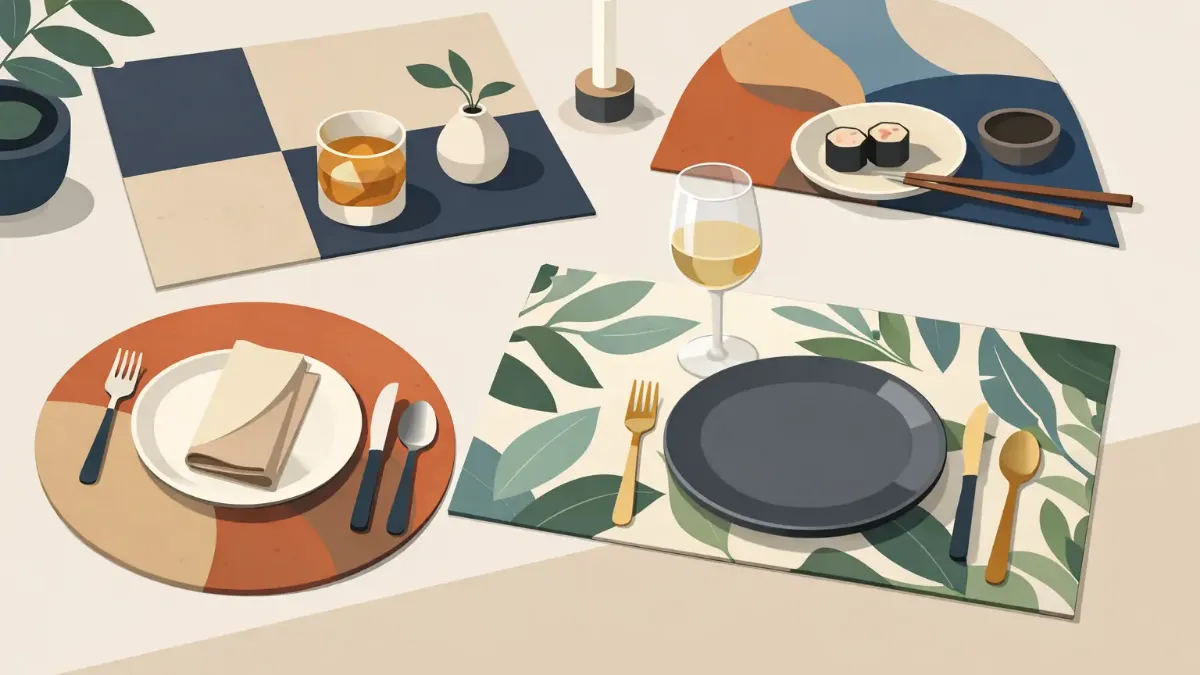
A vivid botanical print can bring softness to a clean-lined dining area. Abstract color can give a neutral kitchen a needed jolt of energy. A graphic pattern can make an outdoor lunch feel considered instead of improvised. The table becomes a visual field, not simply a protected surface.
That matters because a dining area is often visible even when no one is eating. In an open-plan home, the table may be part of the view from the kitchen or living room all day. Placemats give that space a finished look without requiring a full tablescape. They can make a four-person table feel ready for company on an ordinary Tuesday.
Start With the Mood, Not the Matching Set
The most successful custom placemats do not need to match every object in the room. Exact coordination can feel flat. A better approach is to choose a design that relates to the room through one or two elements: a shared color, a repeated shape, or a similar level of visual energy.
If the room is quiet - pale walls, wood furniture, restrained ceramics - a placement with saturated artwork can become the focal point. Choose one dominant shade already present in a rug, painting, or upholstery, then let the placemat expand its presence. Deep green, terracotta, cobalt, saffron, and ink blue tend to hold their own against natural wood and neutral stone.
In a room with stronger existing pattern, restraint may be more effective. A placemat with a simple border, tonal artwork, or a clean geometric composition can provide structure without competing with the wallpaper, curtains, or statement dinnerware. The goal is not to make every surface speak at once. It is to give the table its own clear voice.
Scale is part of the decision. Small-scale patterns often feel more refined from a distance and work well with decorative plates. Larger artwork reads with more confidence, especially on a long table or wide island. If the design is bold, use simpler napkins and dinnerware so the placemat remains visible rather than disappearing beneath a pile of competing details.
Let the Table Shape Guide the Composition
Round tables naturally suit softer forms, curved motifs, florals, and designs with movement. They invite a more conversational setting, where each place setting participates in a central composition. Rectangular tables can handle stronger repetition, linear patterns, and artwork with a more architectural rhythm.
For long tables, consider how the placemats look together as a group. Six individual placements create a larger visual pattern across the tabletop. A design that feels striking on one placemat but chaotic when repeated six times may not be the right choice. Conversely, a subtle print can become more compelling through repetition.
Material and Print Quality Are Part of the Design
A placemat has to survive the life happening around it. That includes coffee rings, pasta night, hurried breakfasts, children’s art projects, and the occasional red-wine mishap. A beautiful design is only useful if it maintains its color and finish through regular use.
This is where sublimation-based printing earns its place in a design-led table setting. The process produces artwork with vivid color and fine detail, rather than a surface that feels like an afterthought. It is particularly suited to artistic prints, gradients, layered textures, and intricate illustrations where flat, limited color would lose the original character.
Durability, however, is not a reason to ignore care. Wipeable placemats are practical for daily meals, but abrasive scrubbers and harsh cleaners can compromise a polished finish over time. For the longest life, clean spills promptly with a soft, damp cloth and store placemats flat when possible. A quick habit preserves the same crisp visual impact that made the design appealing in the first place.
The practical trade-off is simple. Highly textured natural materials can bring a handcrafted look, but they may absorb stains or demand more upkeep. A smooth, art-forward placemat is easier to maintain and allows detailed imagery to shine, though it may feel less casual than woven fibers. Neither choice is universally better. It depends on whether your table is primarily a daily workhorse, an entertaining surface, or both.
Build a Setting Around the Artwork
Custom placemats work best when the rest of the setting gives them room to matter. Start with the placemat, then choose the layers above it rather than treating it as the final addition.
White dinnerware is a reliable companion because it frames artwork without covering it in visual noise. Cream, charcoal, or stoneware can be equally effective when they echo an undertone in the print. If the design includes metallic-looking details or warm tones, brushed brass flatware or amber glass can heighten the effect. For cooler palettes, clear glass and silver-toned accents keep the setting crisp.
Napkins should add texture or a quiet contrast. A solid linen napkin is often enough. If you use a patterned napkin, make sure it has a different scale than the placemat. Tiny gingham over a large floral can work; two similarly sized, high-contrast patterns usually compete.
Centerpieces deserve the same editing. A low bowl of citrus, a few sculptural branches, or a small cluster of candles can complement the table without blocking conversation or hiding the design beneath. The placemats should not be treated as background. They are part of the composition.
Design for Ordinary Meals, Too
The strongest home pieces are not reserved for holidays. Use the artwork you love for cereal, takeout, homework, and weeknight dinners. That is where a table develops warmth and personality.
Keep a set that feels right for daily use, then rotate in more expressive options for seasonal gatherings or special menus. Spring may call for brighter florals or fresh greens. Autumn can support warmer, earthier artwork. For a dinner party, a more dramatic palette can establish the mood before guests taste a thing.
Rotation also gives a small space range. Apartment dwellers and homeowners with compact dining areas do not need multiple tables to create different atmospheres. A new set of placemats can shift the room from relaxed weekend brunch to polished dinner party in minutes.
When Custom Matters More Than Generic
Generic placemats solve a basic problem. They protect a table and provide a predictable layer beneath a plate. Custom placemats do more when the visual result matters: they carry a specific artwork, fit a particular palette, support an event theme, or turn a personal gift into something that will actually be used.
They are especially effective for hosts who want an occasion to feel distinct without purchasing disposable décor. They also make sense for housewarming gifts, wedding-related entertaining, milestone birthdays, and hospitality spaces where the table should reinforce the character of the room.
SubliLux approaches the category as tabletop art with a practical purpose. That distinction shows up in the choice of imagery, the clarity of color, and the way each setting can feel styled rather than merely supplied.
Choose a design that you would be happy to see before a meal is even served. When the table already has a point of view, gathering around it feels a little more memorable.