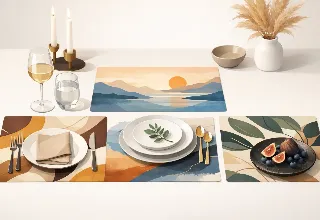
Washable Dining Placemats That Look Considered
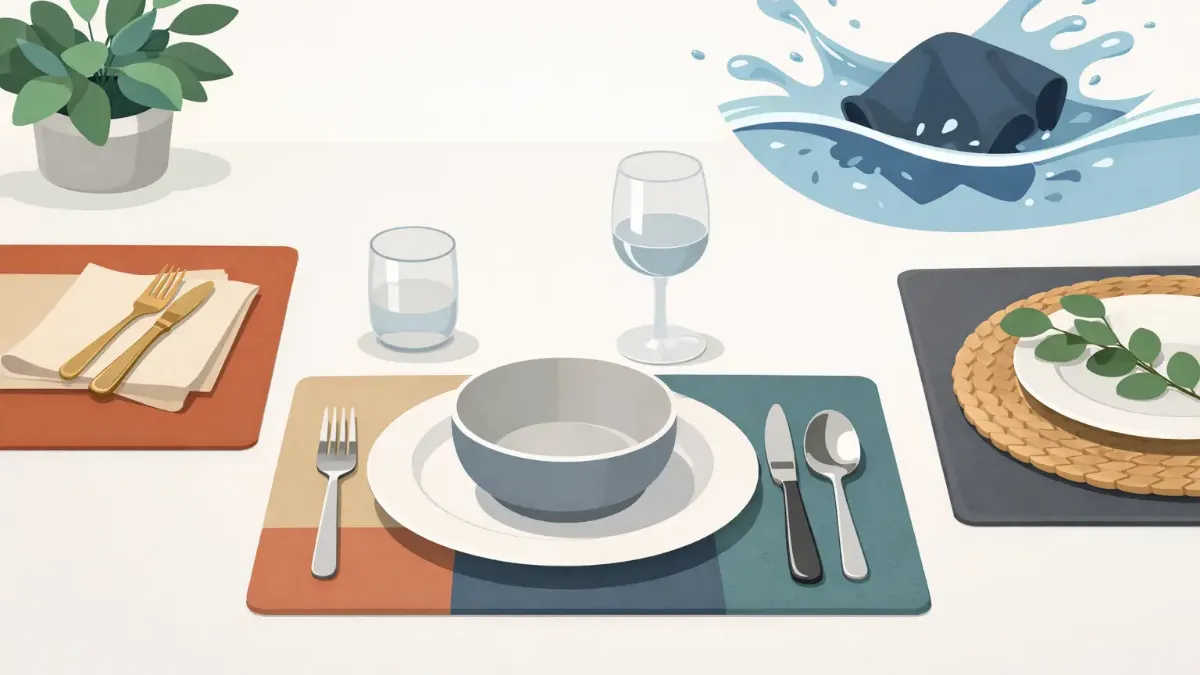
A table set for Tuesday dinner should not require the caution of a formal holiday meal. Washable dining placemats make room for both: expressive pattern and color beneath the plates, with a surface designed to handle a splash of sauce, a ring from a cold glass, or the everyday rush of family dining. The best versions do more than protect the table. They give an ordinary meal a finished visual frame.
For homes where the kitchen table doubles as a workspace, homework station, gathering place, and occasional cocktail table, that balance matters. A placemat should feel intentional enough for guests but practical enough to use without hesitation.
Why washable dining placemats earn their place
A dining table is one of the most visible surfaces in a home, yet it is often left bare because traditional linens can feel too delicate for daily use. They wrinkle, absorb stains, and create another load of laundry after every meal. Hard, generic alternatives may wipe clean, but they can also make a setting feel more functional than inviting.
Washable dining placemats sit in the more useful middle ground. They add a layer of protection between dishes and the table while introducing shape, contrast, and artwork. A deep botanical print can bring depth to a pale oak table. A graphic abstract can sharpen a modern kitchen. A sun-warmed coastal palette can make a patio setting feel planned rather than improvised.
Their value is not simply that they can be cleaned. It is that they allow a table to be styled for real life. Use them for breakfast with kids, takeout with friends, or a dinner that calls for stemware and candlelight. The artwork stays part of the experience instead of being reserved for a special occasion.
Look beyond the word “washable”
Washable is a useful promise, but it can mean different things depending on the material and construction. A placemat may be machine washable, wipeable, hand washable, or designed for spot cleaning only. Before choosing a set, consider how the table is actually used and how much maintenance fits naturally into your routine.
Fabric placemats with printed artwork
Textile placemats offer the softest, most layered look. They work especially well in dining rooms and kitchens where a setting benefits from warmth and texture. When the artwork is created through quality sublimation printing, color can appear rich and precise, with designs that feel integrated into the material rather than placed on top of it.
For art-led designs, print clarity matters. Fine linework, saturated color, and subtle gradients should remain crisp after repeated cleaning. A premium printed placemat can make a bold pattern feel polished, while a weak print can quickly look flat or faded.
The trade-off is that fabric requires a little more care than a vinyl-style surface. Crumbs and small spills are simple enough to address at the table, but sauces, wine, and oil should be treated promptly. Check the care instructions before laundering, particularly when a placemat includes backing, stitching, or a structured finish.
Wipe-clean surfaces
Wipe-clean placemats are often the easiest choice for high-volume family meals, outdoor lunches, and homes with very young children. Their surface can be practical for quick cleanup, but material quality makes a visible difference. Lower-grade options may curl at the edges, feel overly glossy, or show wear around the most-used areas.
They can also change the visual mood of a table. A smoother surface tends to feel more contemporary and graphic, while a fabric finish brings softness. Neither is automatically better. The right choice depends on whether your priority is the fastest cleanup possible or a more tactile, layered setting.
Shape, size, and edge finish
A placemat should comfortably hold a dinner plate, flatware, and glass without crowding the person beside it. Rectangular placemats suit long tables and structured place settings. Round versions soften a square or round table, while organic shapes can introduce a more artistic, relaxed note.
Pay attention to the edge finish as well. A neatly bound, stitched, or cleanly cut edge helps the placemat read as a décor piece instead of a temporary utility layer. It also affects how well the placemat lies flat after washing. Corners that lift and edges that wave can distract from an otherwise beautiful table.
Choosing washable placemats for the way you host
The most satisfying table décor reflects the rhythms of the household. If your dining area is used every day, select a design that complements the room without demanding a fully coordinated tablescape each time. Mid-tone patterns are often forgiving around crumbs and minor marks, while still delivering enough visual presence to transform a simple plate and napkin.
For frequent hosts, think about the table from a guest’s perspective. Placemats create personal space at the table, giving each setting a defined, welcoming proportion. A coordinated set delivers instant order, but matching does not have to mean restrained. A colorful design can be the central decorative element, allowing dinnerware and glassware to remain simple.
If you entertain outdoors, durability becomes more specific. Look for placemats that can handle frequent cleanup and dry thoroughly after washing. A design with strong color can hold its own against natural light, greenery, and casual serving pieces. Patio dining is often less formal, which makes it an ideal place to use artwork that feels playful, saturated, or unexpected.
For gift buyers, washable placemats offer an unusually practical form of personal style. They suit housewarmings, weddings, host gifts, and seasonal occasions because they are useful without being impersonal. The strongest choice is usually a pattern that feels distinctive but flexible enough to work across several rooms and occasions.
Care that preserves the finish
Good care starts before the wash cycle. Clear crumbs after each meal and blot spills rather than rubbing them deeper into the surface. For tomato-based sauces, red wine, coffee, or oils, act quickly. The longer a spill sits, the more likely it is to leave a trace, even on materials made for regular cleaning.
When machine washing is appropriate, use the temperature and cycle specified by the maker. Gentle washing and mild detergent generally preserve color and shape better than aggressive settings. Avoid bleach unless the care guidance explicitly permits it. Bleach may seem like a shortcut for stains, but it can dull printed color and weaken certain fibers over time.
Drying deserves equal attention. High heat can affect shape, backing, or edge finish, so air drying or low heat is often the safer route when recommended. Before storing, make sure the placemats are completely dry. This is particularly relevant for pieces used outdoors, where moisture can linger unnoticed between layers.
A small amount of care protects the reason you chose them in the first place: the visual impact. Designs made to bring color to the table should still look composed after the tenth meal, not just the first.
Style the table without overworking it
Artful placemats can lead the setting, which means the rest of the table can remain edited. Pair a detailed print with solid dinnerware. Let a color from the artwork reappear in a cloth napkin, a small vase, or a candle. The result feels connected without becoming overly matched.
For everyday use, repeat a favorite pattern across all settings and vary the food, flowers, or napkin color with the season. For a more collected look, combine placemats from one visual family, such as related botanical motifs or complementary colors, while keeping the plate shape consistent. The goal is cohesion, not perfect uniformity.
SubliLux approaches the placemat as a decorative surface with a purpose: a place where durable printed artwork can make daily dining feel more considered. That perspective is especially useful when a room needs a visual refresh without replacing furniture, repainting walls, or committing to a larger redesign.
Choose a design you will be glad to see before the meal begins. When cleanup is simple, there is no reason to save a beautiful table for company.