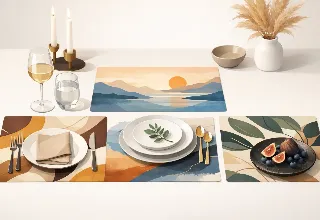
Personalized Photo Placemats That Set the Tone

A table can hold more than dinner. It can hold a favorite coastline, a beloved dog caught mid-run, the soft blur of a garden, or the faces that make a house feel like home. Personalized photo placemats bring those images out of the camera roll and into the daily rhythm of meals, coffee, celebrations, and slow weekend breakfasts.
Done well, they do not read as novelty décor. They create a table setting with a point of view - personal, artful, and considered. The difference comes down to image choice, color, scale, and the restraint to let one strong visual idea lead.
Why Personalized Photo Placemats Feel More Intentional
Walls get most of the attention when people think about displaying photography. Yet the table is one of the most visible surfaces in a home. It is where family routines happen, where guests gather, and where seasonal styling can change the mood of a room without replacing furniture or repainting a wall.
A photo placemat makes that surface part of the décor. It offers practical protection beneath plates and glasses while adding a layer of visual identity that can be changed as easily as the table setting itself. For renters, small-space dwellers, and anyone who wants a fresh look without a permanent project, that flexibility matters.
Photography also has an advantage over generic pattern: it carries a memory. A set featuring travel photographs can make a dining room feel collected rather than decorated. Images from a wedding, family archive, or milestone trip can turn an anniversary dinner into something quietly meaningful. For a host, a set created around a favorite landscape or local landmark offers an immediate conversation starter without making the table feel overly themed.
The trade-off is that personal imagery needs a little more editing than a standard print. The best result is rarely a collection of unrelated snapshots. A table looks more elevated when the images share a visual language.
Start With the Mood, Not the Photo Album
Before selecting images, decide what the placemats should do for the space. A dining table with warm wood, linen upholstery, and brass accents may suit sun-washed architecture, botanical close-ups, or softly toned travel photography. A clean, contemporary kitchen can handle higher contrast: black-and-white portraits, sharp city scenes, or a saturated abstract image.
This first decision narrows the field. It also keeps the final set from becoming a scrapbook of every meaningful picture you own.
Build a Cohesive Set
A matching set can use one image across every placemat, but it does not have to. Four different photographs often feel more layered when they share color, subject, or composition. Think of them as a small gallery arranged around the table.
For example, a coastal set might combine four views from the same trip: dune grass, an ocean horizon, a weathered dock, and a close-up of shells. The subjects vary, but the pale sand, blue water, and natural texture connect them. A family-oriented set may use candid portraits from one afternoon, edited in the same warm palette.
If the table is already visually active - dramatic dinnerware, patterned curtains, a bold rug - choose calmer images with breathing room. An expansive sky, a simple floral detail, or a portrait with a clean background will be easier to live with than a tightly packed, high-contrast scene. If the room is quiet, the placemats can carry more color and movement.
Choose Images That Can Handle the Crop
A strong photograph on a phone screen is not automatically a strong placemat image. A placemat is horizontal and relatively wide, so images need enough room around the main subject to be cropped without losing what makes them special.
Landscape photographs are usually natural candidates. Portrait-oriented images can work beautifully too, especially when the subject is positioned off-center or there is usable background on either side. A close-up portrait with faces near the edge may be harder to place without cutting off a head, hand, or important detail.
Resolution matters as well. Use the original file whenever possible, not a screenshot, social-media download, or image forwarded repeatedly through text messages. A high-quality original preserves the clarity and color detail needed for a refined printed finish. If an older photograph is a little soft or grainy, that is not always a reason to reject it. Black-and-white treatment or a deliberately vintage palette can make the imperfection feel intentional.
Color Is the Quietest Styling Decision
Color determines whether a photo placemat feels integrated with the room or dropped onto the table. Look at the tones already present in your dining area: the tabletop, chair fabric, cabinetry, wall color, and the dishes you use most often. Your images do not need to match these precisely, but they should have a relationship to them.
A blue-toned photograph can cool down a warm wood table. Terracotta, olive, and amber images can make a white or stone-colored kitchen feel warmer. Black-and-white photography is especially versatile, though it creates a more graphic, editorial look than a soft color palette.
Be realistic about highly saturated images. They can be exceptional for a patio table, a playful breakfast nook, or modern entertaining, but they may compete with food, flowers, and patterned dinnerware. If the images are vivid, simplify the rest of the setting. White plates, clear glassware, and a neutral napkin let the artwork remain the focal point.
At SubliLux, the goal is not merely to reproduce a photograph. It is to give color, contrast, and detail a place in the composition of the room.
Design for the Table You Actually Use
The most successful personalized photo placemats balance sentiment with everyday function. Consider the size and shape of your table, how many settings it usually holds, and whether you entertain formally or casually.
For a round table, a coordinated series of images can feel especially inviting because every guest gets a different view. For a long rectangular table, repetition can add order: use the same image at each setting, or alternate two complementary scenes. A large dining table may support bolder imagery, while a compact apartment table often benefits from lighter photos with less visual density.
It is also worth considering the occasion. A family photo set can be wonderful for holiday gatherings, milestone dinners, or a breakfast table that feels distinctly yours. For frequent entertaining, travel images, still life photography, or nature studies may offer the same personality with broader appeal to guests.
There is no rule that says every meaningful photo belongs on the table. Some images are more private, and some are simply too busy for daily use. Editing is not a loss of sentiment. It is what gives the chosen photos presence.
Finish the Setting With Restraint
Once the placemats carry photographic detail, the rest of the table should support rather than compete. A sculptural vase, a low arrangement of seasonal branches, or a few taper candles can be enough. Keep centerpieces low enough for conversation and leave room for the images to remain visible around the plates.
Napkins are an easy way to echo a color found in the photograph. Pull the deep green from a forest scene, the blush from a sunset, or the charcoal from a black-and-white city image. This creates polish without the stiffness of a fully matched set.
For gifts, the same principle applies. A photo placemat set feels most generous when it is designed for the recipient's home and habits, not just the occasion. A newly married couple may appreciate images from their favorite trip. Grandparents may treasure family photographs, while a design-minded friend may prefer a striking architectural image they took themselves.
Keep Them Ready for Real Life
Beautiful tabletop pieces should not demand ceremonial treatment. Wipe placemats after meals with a soft, damp cloth and mild soap when needed, then allow them to dry fully before stacking. Avoid abrasive cleaners, rough scouring pads, and prolonged soaking, which can dull a finished surface over time.
For the best long-term appearance, keep them away from extreme heat and store them flat when they are not in use. If the table gets direct sun every afternoon, rotating the set or using a runner can help limit uneven exposure. Care instructions can vary by construction, so follow the guidance provided with the specific product.
The most compelling table settings are not the ones that look untouched. They are the ones that invite people to sit down. Choose photographs with a story, edit them with a designer's eye, and let the table become one more place where your home feels unmistakably your own.