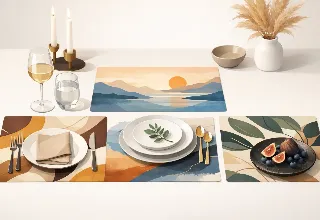
Outdoor Patio Placemats That Set the Scene

A patio table can be beautifully built and still feel unfinished at mealtime. The missing layer is often the one closest to the plate: outdoor patio placemats. They define each setting, protect the surface beneath, and introduce the color or artwork that turns a casual lunch outside into a considered occasion.
Unlike indoor table linens, outdoor pieces need to look composed while handling sun, humidity, condensation, sauce spills, and the occasional gust of wind. The right choice is not simply the most weatherproof option. It is the placemat that suits the way your patio is used, the table material, and the atmosphere you want to create.
What Outdoor Patio Placemats Need to Do
A good outdoor placemat has a short but demanding job description. It should provide a stable, clean surface for dinnerware, shield the table from everyday marks, and hold its visual character in bright natural light. For hosts, it should also make setup feel quick rather than precious.
That balance matters because patio dining is less controlled than dining indoors. A cold drink sweats. Citrus slices leave a trace. A dark tabletop grows hot in the afternoon. A beautifully printed mat that curls at the corners or shows every water ring will not feel luxurious for long.
Start with the table itself. On teak, acacia, painted wood, or composite surfaces, placemats help limit contact with moisture and food residue. On glass or metal, they add warmth and reduce the hard, reflective quality of the surface. On textured stone or slatted tables, a firmer placemat can create a more even place setting, though a very rigid style may rock if the surface is especially uneven.
Choose the Material for Your Patio, Not Just the Look
Material determines how a placemat behaves outdoors. It also shapes the mood of the setting.
Wipe-Clean Printed Surfaces
Placemats with a smooth, easy-care surface are a strong choice for frequent outdoor meals. They are especially practical for families, poolside tables, and hosts who prefer to clear and reset a table without laundry. A quick wipe handles most everyday spills, while vivid printed artwork can bring detail and depth that woven neutrals cannot always achieve.
This category works best when the print is designed to remain clear and color-rich over time. Sublimation-based printing is particularly suited to expressive artwork because it creates saturated color with a polished finish. At SubliLux, that visual clarity is part of the point: the placemat is not a background accessory, but a small piece of art placed at every seat.
The trade-off is heat. Any synthetic or coated material deserves a little care with very hot cookware. Use trivets for serving dishes fresh from the grill or oven, and avoid assuming a placemat is a substitute for a heat-safe pad.
Vinyl and Other Flexible Synthetics
Vinyl-style placemats are durable, practical, and often easy to store. They can be a smart fit for a high-traffic patio, especially where cleanup is the first priority. Their clean edge and slight sheen suit contemporary outdoor furniture, though they may feel less tactile than fabric or woven materials.
Look for a weight that lies flat. Very thin versions can lift in the wind or retain a curl from packaging. A non-slip backing is useful on glass, powder-coated metal, and other slick tables.
Woven Fibers and Natural Textures
Rattan, seagrass, jute, and similar woven looks bring organic texture to a patio. They pair naturally with linen napkins, ceramic dinnerware, and wood furniture. Their appeal is relaxed and dimensional, making them ideal when the table should feel collected rather than graphic.
They do require more protection from weather. Natural fibers can absorb moisture, stain more easily, and become misshapen if left in rain or heavy dew. Choose them for covered porches, screened patios, or special-occasion tables, then bring them inside after the meal.
Fabric and Outdoor Textiles
Fabric placemats soften a table immediately. They are excellent for long dinners, celebrations, and layered settings where runners, napkins, and cushions share a coordinated palette. Outdoor-rated textiles offer better resistance to moisture and fading than standard cotton, but they still need washing and fully dry storage.
Fabric is the most forgiving choice visually and the least forgiving choice for unattended outdoor use. If your patio is exposed, treat it as a dinner-table material, not permanent furniture dressing.
Match Pattern Scale to the Table
The artwork on a placemat should work with the whole table, not compete with every other object on it. This is where proportion makes a noticeable difference.
For a small bistro table, choose a design with a clear focal point, modest repeat, or open areas of color. Large-scale florals and dense abstract artwork can feel crowded when plates, glasses, and serving pieces occupy most of the surface. On a long rectangular dining table, bolder patterns have room to breathe and can create an intentional visual rhythm from one seat to the next.
Consider the table color as well. A pale stone or white-painted surface can carry deep navy, terracotta, emerald, and high-contrast artwork beautifully. Dark tables often benefit from lighter ground colors or patterns with enough brightness to keep the setting from disappearing after sunset.
There is no rule that every place setting must match. Coordinating two complementary designs can give a larger table a more editorial look. Keep one element consistent - perhaps the same base color, border treatment, or botanical theme - so the mix feels curated rather than accidental.
Make Color Work in Outdoor Light
Sunlight changes color. What appears subtle in a product image may look much brighter at noon, while a deep palette can become dramatic and intimate as daylight fades. Before committing to an entire tablescape, think about when you use the patio most.
For daytime brunches and poolside lunches, lively blues, citrus tones, leafy greens, and bright florals feel at home against sky and foliage. For evening dinners, consider richer tones such as ink blue, burgundy, olive, warm ochre, or black paired with luminous pattern detail. These shades anchor the table under string lights and candlelight.
The surroundings should guide you, not limit you. A neutral patio is an invitation to bring in artful color. A garden full of flowers may call for a quieter geometric or painterly design that complements rather than imitates the view. If your furniture already has patterned cushions, a placemat with a simpler field of color can give the eye a place to rest.
Size, Shape, and Spacing Matter
A standard rectangular placemat is versatile, but it is not the only option. Round placemats soften square or rectangular tables and echo the shape of many outdoor dinner plates. Oval forms can feel graceful on a narrow table. Rectangular pieces offer the cleanest alignment on long dining tables and work well when chairs sit close together.
Give each guest enough room to dine comfortably. A placemat should hold the dinner plate and leave a visible border, rather than disappearing completely beneath it. At the same time, it should not extend so far that it collides with a neighboring setting. On compact tables, use fewer decorative layers and let the placemat do more of the visual work.
If you use a table runner, choose one role for each piece. A patterned runner usually pairs best with quieter placemats. If the placemats carry the artwork, use a solid runner or skip it entirely. The table will feel more refined when the design has one clear lead.
Care That Preserves the Finish
Outdoor-friendly does not mean leave outside indefinitely. Even durable placemats last longer when they are cleared after meals and stored away from prolonged direct sun, rain, and overnight dampness. This is particularly true in coastal areas, where salt air and humidity can leave residue on surfaces.
For wipe-clean placemats, use a soft damp cloth and mild soap when needed. Avoid abrasive sponges, harsh bleach, and strong solvents that can dull a printed finish. Dry them before stacking so moisture does not become trapped between layers.
Store placemats flat whenever possible. If space requires rolling, make a loose roll with the printed side facing outward and avoid tight bends. For woven or fabric styles, make sure every piece is completely dry before storing it in a clean, ventilated place.
Create a Table Worth Lingering At
The best patio settings are not overstyled. They feel ready for the people who will use them: a weeknight dinner with grilled vegetables, a birthday lunch that runs late, or coffee that becomes an unplanned conversation. Outdoor patio placemats help establish that ease because they make the table look prepared before the first plate arrives.
Choose a design that gives your outdoor space a distinct point of view, then let the rest stay simple. A beautiful placemat, good food, and a table set with care are often all an open-air meal needs.